Extended producer responsibility for packaging: the core definition
Extended producer responsibility for packaging is an environmental policy framework that holds commercial sellers financially responsible for collecting, sorting, and recycling the packaging materials they put into circulation. Under European waste legislation, any business that first introduces packaged products onto a domestic market bears the responsibility to fund its end-of-life management. For Dutch webshops and product brands, this requires determining which entity acts as the legal producer and ensuring that all primary, secondary, and transport packaging complies with national reporting requirements.
The foundational logic of packaging producer responsibility transfers waste management costs from municipal budgets to commercial operators. Anyone distributing packaged goods to end users must contribute to the recovery infrastructure proportional to the weight and material type of their packaging. This obligation applies regardless of whether the business manufactures the box or purchases standard cardboard mailers from a wholesale supplier. To evaluate compliance requirements, businesses must examine their sales model, distribution channels, and EPR packaging types.
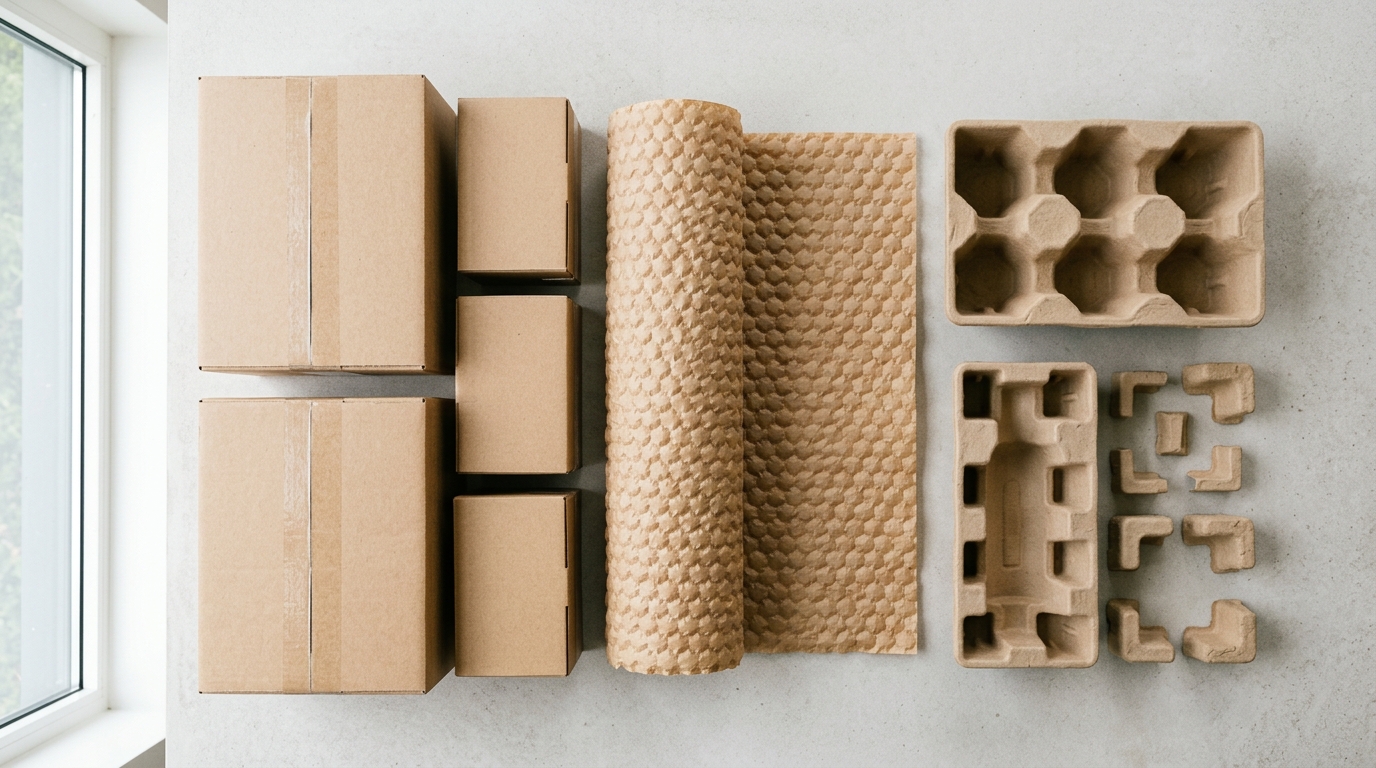
- Sales packaging (primary): packaging designed to contain a single sales unit for the end consumer at the point of sale.
- Grouped packaging (secondary): packaging designed to group a specific number of sales units together at the point of sale.
- Transport packaging (tertiary): packaging designed to facilitate handling and transport of multiple sales units or grouped packages to prevent damage during transit.
While adjacent environmental regimes govern electronic waste or portable batteries through separate compliance tracks, packaging producer responsibility focuses strictly on physical containment, protection, and handling materials. Identifying your legal status early prevents administrative oversights and establishes a clear baseline for tracking material flows across your supply chain.
How the Dutch system works: Verpact and the waste fee
In the Netherlands, packaging producer responsibility operates through a collective framework supervised by government authorities and managed by a dedicated producer responsibility organisation. The Human Environment and Transport Inspectorate (Inspectie Leefomgeving en Transport, ILT) oversees compliance with EPR regulations in the Netherlands, and producers or importers who place products falling under EPR schemes on the Dutch market must inform Rijkswaterstaat every year about the quantity of products they have sold and how much waste they have collected[1]. Dutch EPR rules make producers, importers included, responsible for the waste management of the products they place on the market, and producers usually meet that duty collectively through a producer organisation that they join and pay a financial contribution to[2]. For packaging, that organisation is Verpact: as a manufacturer or importer of packaging or packed products you are responsible for managing the packaging until the waste phase, which includes paying for and organising the collection and recycling of packaging materials[3].
Companies bringing more than 50,000 kilograms of packaging material onto the Dutch market in a calendar year must report the quantity of packaging they place on the market and pay the packaging waste management contribution to Verpact[3]. Two details decide what that means for a webshop. The threshold is a total limit across all packaging materials together, not a limit per material, and it does not apply at all to deposit packaging or packaging covered by the single-use plastics rules, which are declared from the first kilogram[7]. Cross the threshold and the first 50,000 kilograms are still deducted from the invoice basis, pro rata to each material's share of your weight, so the threshold works as an allowance rather than a cliff[7]. Below the threshold there is no declaration duty and no contribution, though you must still be able to show the weight and material of the packaging you place on the market[3], which is also the record any packaging fee calculation starts from.
The tariff depends on the material, and the gap is large enough to drive packaging decisions on its own. For 2026 Verpact charges 0.017 euro per kilogram for paper and cardboard against 1.220 euro for rigid plastic and 1.320 euro for flexible plastic, with glass at 0.100, aluminium at 0.340, other metals at 0.360, wood at 0.015 and drink cartons at 0.920 euro per kilogram. On top of that Verpact rewards design: the recyclate discount was raised from 10 to 20 cents per kilogram for 2025 and the discount steps stay the same for 2026, and for plastic the combined design and recyclate discounts can reach 60 cents per kilogram[4].
| Compliance Element | Dutch rule today | Regulatory Basis |
|---|---|---|
| General reporting and contribution threshold | More than 50,000 kg of packaging per calendar year, counted across all materials together, triggers the declaration duty and the waste management contribution to Verpact[7] | Besluit beheer verpakkingen 2014 |
| Below the threshold | No declaration and no contribution, but you must still be able to show the weight and material of your packaging[3] | Besluit beheer verpakkingen 2014 |
| Packaging without a threshold | Deposit packaging and single-use plastics packaging are declared from the first kilogram and are excluded from the threshold correction[7] | Statiegeld and SUP rules |
| Fee structure | Material-specific tariffs per kilogram (0.017 euro for paper and cardboard, 1.220 euro for rigid plastic in 2026), plus discounts for well-recyclable packaging and recyclate use[4] | Verpact tariff schedule 2026 |
| Supervision | ILT oversees compliance with EPR regulations; producers and importers report to Rijkswaterstaat every year on products sold and waste collected[1] | Environmental Management Act (Wm) |
These fees directly finance the national recycling infrastructure required to meet Dutch and European circular economy targets. By linking fee amounts to material weight and recyclability, the Dutch system incentivises webshops to reduce empty space and choose easily recyclable materials.
Who counts as a producer or importer
A common misconception among online retailers is that producer status applies only to factories operating packaging machinery. Under Dutch EPR rules, producers are the companies and private individuals that are the first to sell products falling under EPR in the Netherlands[1], and as a manufacturer or importer of packaging or packed products you are responsible for managing that packaging until the waste phase[3]. This definition encompasses webshops importing goods from foreign suppliers, brand owners placing private-label items into circulation, and retailers using shipping boxes to fulfil customer orders.
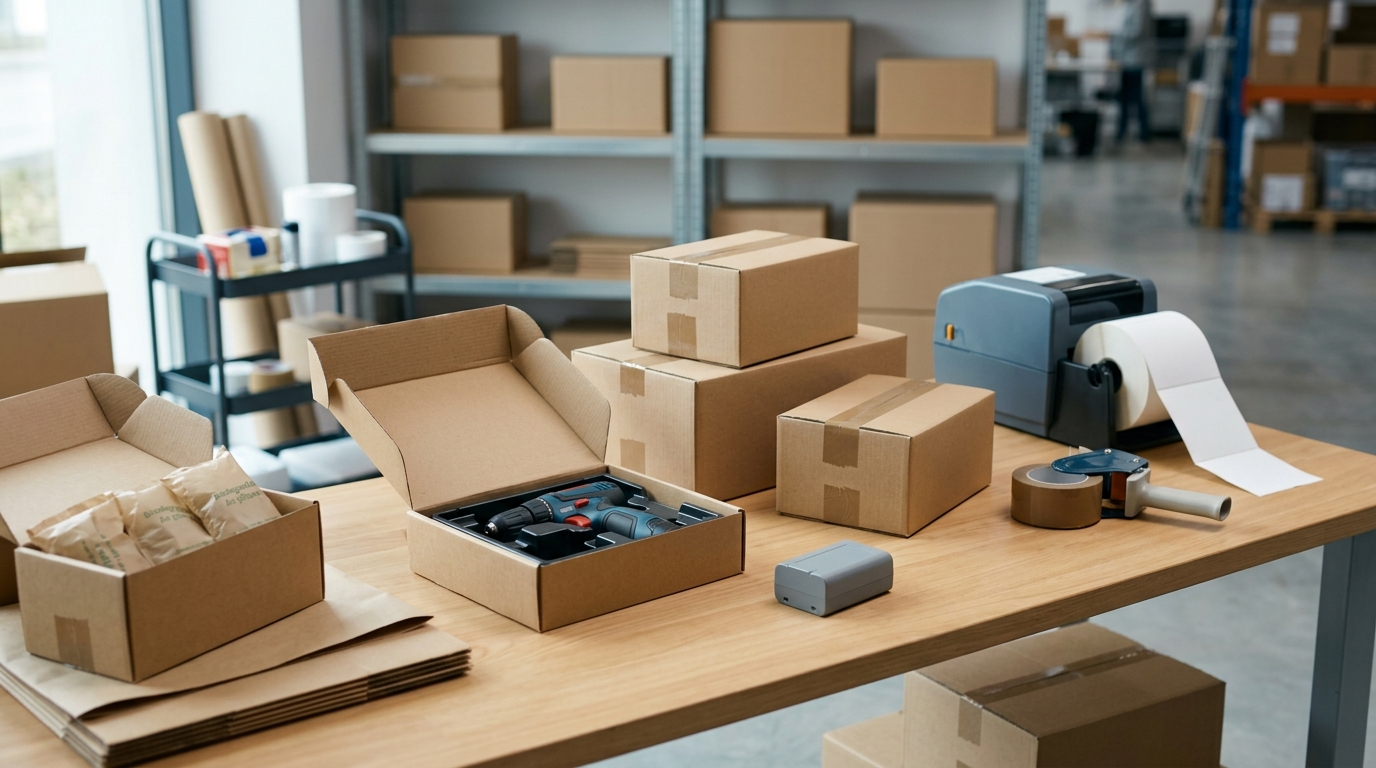
Your precise role in the commercial chain determines whether you hold legal responsibility for packaging waste. For example, if a Dutch webshop purchases finished goods from a Dutch wholesaler who has already placed those packaged items on the national market, the wholesaler bears the producer responsibility for the primary sales packaging. However, the webshop remains responsible for any added shipping packaging: the boxes, bubble wrap and tape introduced during order fulfilment. Conversely, manufacturers and importers are responsible for the waste from packaging and packed products they bring onto the Dutch market from abroad[3], so a webshop importing goods directly becomes the obligated party for the packaging around them.
| Supply Chain Setup | Legal Role | Obligated Packaging Scope |
|---|---|---|
| Direct import from a foreign supplier | Importer / first placer | Primary product packaging plus transport packaging |
| Private-label production for the webshop | Brand producer | All sales packaging carrying the webshop brand |
| Local sourcing from a Dutch wholesaler | Fulfilling retailer | Added e-commerce shipping packaging only |
One caveat before you conclude that the shipping boxes are always yours. Verpact has paused exactly this question for shipping, service and primary production packaging: it is not settled whether the producer of that packaging is the manufacturer or importer of the empty box, or the retailer who fills it. Until that is resolved, Verpact asks producers and packers to keep working from the situation as it stood before 12 August 2026, and clarity may apply retroactively to that date. The pause covers only who declares the Dutch kilograms. It postpones none of the product rules on the packaging itself.
An explicit no-case occurs when someone else is the first to place the goods on the destination market. If a Dutch company sells to a German retail buyer under Delivered At Place (DAP) terms, the German buyer clears the goods through customs and is the importer of record, so the Dutch seller is not the first placer in Germany. The same applies where a third-party marketplace acts as the legal importer. Delivered Duty Paid (DDP) does the opposite: under DDP the seller handles import clearance and duties, which makes the Dutch seller the importer of record in Germany and therefore the obligated party there. Verifying contract terms such as Incoterms, customs entry declarations and transfer-of-title points allows businesses to confirm where their obligations begin and end.
What it means for your webshop in practice
For Dutch webshops meeting or approaching statutory thresholds, managing producer responsibility involves four operational routines. Businesses must first register with Verpact, establish continuous weight tracking across all packaging materials, submit an annual material declaration, and settle the corresponding invoice, a sequence our Verpact registration guide walks through step by step. Maintaining structured records of cardboard, plastic, glass, wood, and metal weights ensures that annual statements withstand regulatory audits by the ILT.
Accurate weight tracking requires establishing standard packaging profiles for common SKU sizes. Webshops typically weigh representative samples of cardboard mailers, fill material, and sealing tape, multiplying those averages by total annual order volume. While managing Dutch obligations, cross-border e-commerce sellers must recognise that national registration frameworks do not cross borders automatically. For example, Germany maintains its own independent registration regime under the PPWR and the VerpackDG, which replaced the Verpackungsgesetz on 12 August 2026, with the LUCID register and dual system licensing, requiring separate compliance steps for German sales.
Since 12 August 2026 there is a second cross-border duty on top of those national registers, and it is the most expensive single item on this list for a shop that ships abroad. Article 45(3) of the PPWR requires a written mandate appointing an authorised representative for extended producer responsibility in every member state where you make packaging available for the first time and are not established[8]. A Dutch webshop sending parcels to consumers in Germany, Belgium and France needs a representative in each of those three countries, not one for the EU. The Commission proposed suspending that duty until 2035 for producers already established in the EU on 10 December 2025, and the Council discontinued negotiations on the file on 24 June 2026, so the obligation applies as written and there is no small-business carve-out.
- Register organization details and contact points with Verpact.
- Implement SKU packaging weight profiling across cardboard, plastic, paper, and metal.
- Submit annual weight reports covering total packaging placed on the market during the preceding calendar year.
- Settle annual waste management contributions based on applicable material tariffs.
By systematising data collection early, webshops turn regulatory reporting into a predictable administrative process rather than an annual operational burden.
Where the PPWR fits: the EU layer on top of the Dutch system
European packaging law is undergoing a major structural transition under Regulation (EU) 2025/40, known as the Packaging and Packaging Waste Regulation (PPWR). The PPWR entered into force on 11 February 2025 and has applied across all EU member states since 12 August 2026[5]. As a directly applicable regulation, the PPWR introduces harmonised design-for-recycling rules, mandatory empty-space ratios, and updated conformity documentation requirements for packaging manufacturers and importers across the European single market.
A central development for small webshops involves the future of minimum reporting limits. Today, the Dutch threshold of 50,000 kilograms of packaging per calendar year remains fully in force under national law, and companies at or above it must report to Verpact and pay the packaging waste management contribution[3]. Verpact's PPWR timeline puts the national producer register into effect on 12 August 2027 and marks 2028 as the first reporting year, to be declared before 1 June 2029[6]. Verpact expects the declaration threshold to disappear at that point, with a simplified declaration for companies placing less than 10,000 kilograms of packaging on the Dutch market[6]. Those are Verpact's operational expectations, not yet enacted in a published Dutch statutory instrument, and the tariff levels and calculation basis that would apply to smaller volumes have not been determined. Until an instrument is published, the 50,000 kilogram threshold is the rule you plan against.
- 11 February 2025: Regulation (EU) 2025/40 (PPWR) entered into force.
- 12 August 2026: General application date for PPWR provisions across EU member states, including the Article 45(3) authorised representative.
- 12 August 2027: Earliest expected introduction of the PPWR producer register per Verpact guidance (subject to national implementation).
- 2028: First reporting year under that register per Verpact, to be declared before 1 June 2029.
Outlook: how the rules develop from here
Beyond the dates already published, the honest answer is that nobody can say precisely what will apply to Dutch packaging producers in two years. The EU framework keeps being filled in through secondary legislation and Commission guidance, and the Dutch instruments that translate it into national duties, including how a producer register would replace today's threshold, have not been published yet. A pending change only becomes real when it is published in the Staatsblad or Staatscourant, which is exactly why getting your position under the rules that apply today right matters more than forecasting the ones that may follow.
Which packaging obligations apply to your webshop depends on your exact role in the packaging chain. A webshop using standard packaging sourced from an EU supplier faces different duties from a business importing packaging directly or having custom boxes manufactured to its own specifications. These distinctions cannot reliably be resolved through a general checklist alone. To understand your compliance position today and be on the safe side, start the EPR needs assessment now. Afterwards, our experts support you in implementing the requirements and keep you covered as the rules evolve.
Frequently asked questions
- Which EPR scheme applies to what I sell?
- The applicable scheme depends on your sales market and product. In the Netherlands, Verpact manages packaging EPR for businesses reaching 50,000 kg of packaging across all materials in a calendar year, with deposit and single-use plastics packaging declared from the first kilogram. Other product groups, such as electrical equipment or batteries, run through their own separate schemes, and sales into another EU country trigger that country's own registration plus an authorised representative there under Article 45(3) of the PPWR.
- Who counts as the producer in my setup?
- You are generally considered the producer if you are the first to place a packaged product on the Dutch market. For Dutch webshops, this includes importing goods, adding shipping boxes when you fulfil orders, or selling under your own private label.
- Where do I start if none of this has been arranged yet?
- Begin by determining your exact role in the packaging chain and mapping the countries you sell to, then set up weight records per material so a declaration is possible at all. A needs assessment evaluates your combination of products, roles, and sales channels to produce a specific profile of your obligations.