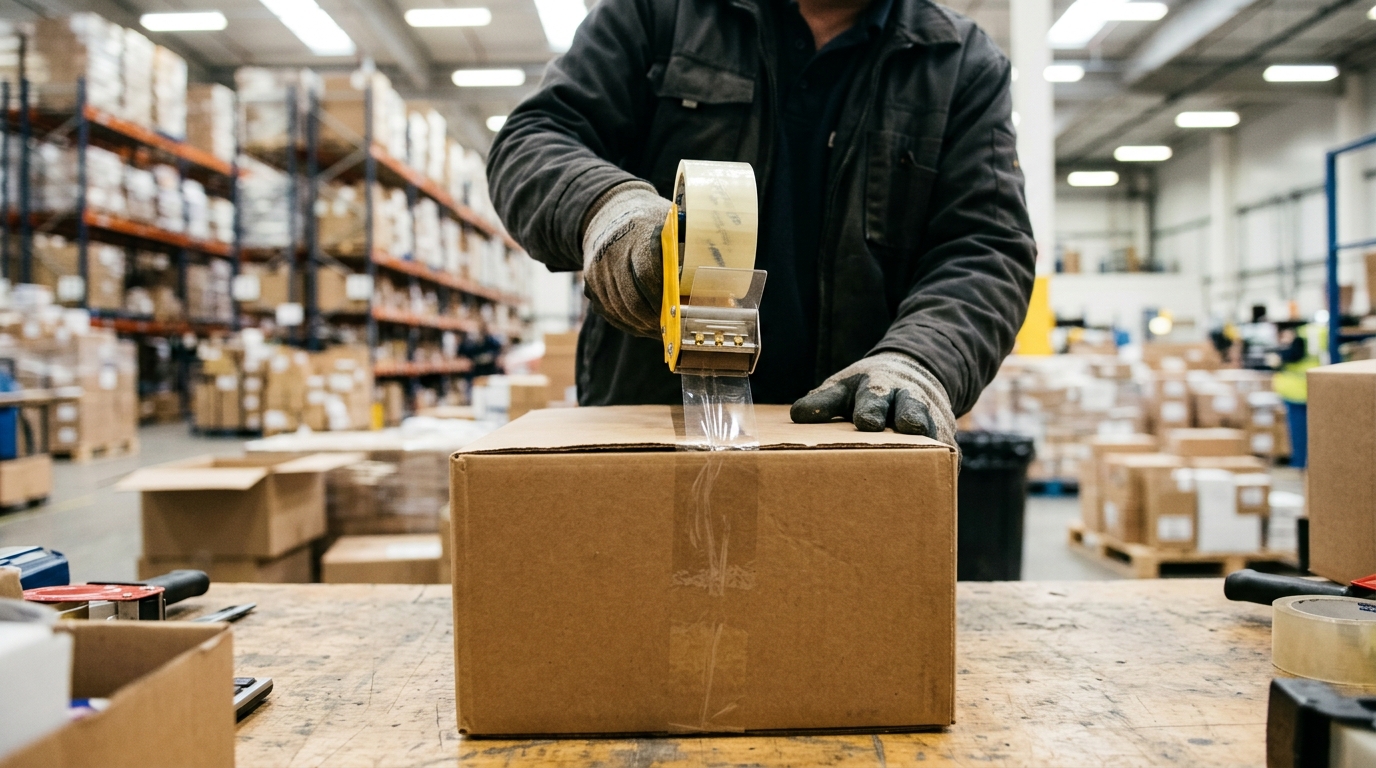
Yes - shipping packaging counts towards your Verpact registration
Yes, shipping packaging counts towards your Verpact registration in the Netherlands. If you pack goods in boxes, mailers, tape, or protective filler to send them to customers, you are a manufacturer or importer of packaging and packed products under the 2014 Packaging Management Decree (Besluit beheer verpakkingen 2014) and carry extended producer responsibility for that packaging[1]. Verpact applies the legal definition of packaging, which in principle covers all products that can be used for enclosing, protecting, shipping, delivering or supplying other products, so every outer box, padded envelope, or plastic wrap you add to dispatch an order is packaging placed on the Dutch market[2]. Other Extended Producer Responsibility (EPR) regimes like electronics or batteries operate under separate rules, but shipping materials fall directly under the packaging framework Dutch EPR schemes. For cross-border sales into Germany, note that Germany enforces its own distinct registration regime (LUCID under the PPWR and the VerpackDG, which replaced the Verpackungsgesetz on 12 August 2026) with zero weight threshold.
Many webshops assume that only primary product packaging, such as a printed retail box, falls under registration obligations. In practice, secondary shipping packaging and tertiary transport materials added at the point of fulfillment carry the same reporting logic. Whether you purchase plain corrugated boxes, custom cardboard mailers, or plastic air pillows, your business introduces these materials onto the market when shipping orders to end users.
- Cardboard shipping boxes and corrugated mailers
- Padded envelopes, bubble mailers, and paper wrapping
- Protective fill including packing peanuts, paper cushioning, and air pillows
- Sealing materials such as plastic packing tape, paper tape, and strapping
What if your situation is slightly different? If you operate across multiple channels or use complex logistics routes, determining which party holds the reporting duty requires evaluating your exact setup. Using our Digital needs analysis helps clarify whether your current shipping setup triggers additional registration steps in the Netherlands or destination markets.
Why it counts: the legal definition of packaging
Under the 2014 Packaging Management Decree (Besluit beheer verpakkingen 2014), you are responsible as manufacturer or importer of packaging and packed products for managing that packaging until the waste phase, and if you bring packaging onto the Dutch market you must be able to show its weight and the materials it is made from[1]. Verpact applies the same legal definition and treats the components and elements of a packaging item as part of that packaging, including measuring caps, pouring spouts and adhesive labels[2]. That is why each element added to ensure safe transit forms part of the total packaging weight you track in your administrative records.
| Packaging Category | Typical Examples | Reporting Party in NL |
|---|---|---|
| Primary (Product) Packaging | Retail box, bottle, jar, or blister pack | Manufacturer or importer of the packaged product |
| Secondary (Shipping) Packaging | Outer shipping box, padded mailer, postal envelope larger than C5 | Shipper or webshop adding the packaging |
| Grouping & Transport Components | Packing tape, void fill, plastic strapping, paper labels | Party applying the components during packing |
In the Netherlands, a financial waste management contribution is paid to Verpact if your business places more than 50,000 kilograms of total packaging material onto the Dutch market in a calendar year[3]. However, keeping accurate administrative records of all packaging types remains essential regardless of your volume. Under small webshop packaging rules, establishing clean data on shipping material weights ensures full transparency if regulatory reporting thresholds change or if your business expands.
Edge cases: reused boxes, fulfilment partners and dropshipping
E-commerce operations frequently involve non-standard logistics setups where packaging ownership appears ambiguous. The fundamental rule stays consistent: manufacturers and importers are responsible for the waste from the packaging and packed products they bring onto the Dutch market. Evaluating edge cases therefore means examining who provides the shipping packaging, where title passes, and whether the materials were already declared within the Dutch system.
- Reused incoming boxes: If your webshop reuses intact boxes received from Dutch suppliers, those boxes were already placed on the Dutch market and declared upstream. You do not need to report the box weight a second time. However, any new tape, new shipping labels, or fresh void fill you add to seal the package counts as new packaging placed on the market.
- Third-party logistics (3PL) and fulfilment centers: When a 3PL partner packs and dispatches orders on your behalf, responsibility depends on the contract and packaging sourcing. If the 3PL provides plain boxes as a service or uses custom-branded boxes provided by you, the party legally placing the packaged product onto the market must be clearly defined. In most standard e-commerce contracts, the webshop ordering the dispatch acts as the producer.
- Dropshipping directly from foreign suppliers: If a foreign manufacturer or supplier ships products directly to a Dutch end customer without passing through your Dutch warehouse, the foreign supplier or the party acting as the importer of record places the packaging on the Dutch market. If title passes to your Dutch entity before domestic delivery, your company holds the reporting obligation.
Identifying an explicit no-case helps prevent double reporting. For instance, when a Dutch wholesaler or retail buyer takes full ownership of goods at a warehouse in another EU country and manages the import under their own registration, your Dutch webshop carries no Verpact reporting duty for that shipment. Defining contractual terms like Incoterms (DDP versus EXW) clarifies where legal responsibility shifts between supply chain partners.
What to do next: get shipping packaging into your records
Bringing shipping packaging into your administrative records requires a systematic approach to data collection. In its 2024 packaging administration guidance, Verpact expects you to register, for each packaging item, the materials used and the weight of each material, multiplied by the quantity of packaging placed on the market in a calendar year, and it names the bill of materials from your supplier as the source for packaging you purchase and add for transport[4]. Working from standard weights per box size rather than weighing every parcel keeps that calculation efficient and auditable, and integrating the figures into your ERP or warehouse management system simplifies annual reporting.
- Categorize standard packaging sizes: Group your shipping materials into standard box sizes, mailer formats, and envelope types.
- Weigh tare components per material: Weigh an empty sample of each box size, breaking down weights by material type such as corrugated paperboard, plastic bubble wrap, or paper tape.
- Calculate average void fill and tape usage: Determine standard weight allowances for void fill, tape, and shipping labels applied per order size.
- Log dispatch quantities annually: Multiply your annual shipped order count for each package size by its recorded tare weight to determine total annual packaging weight.
- Incorporate totals into Verpact filings: Add the calculated shipping packaging totals to your annual Verpact declaration or keep the records ready for verification.
Maintaining a structured packaging administration ensures that your business can quickly respond to audit requests or changes in reporting guidelines. Documenting supplier specification sheets for custom mailers and retaining purchasing records for tape and filler provides clear proof of your material calculations.
Outlook: how the rules develop from here
Regulatory requirements for packaging across Europe continue to evolve. As of 12 August 2026 the first obligations from the European Packaging and Packaging Waste Regulation (PPWR) start to apply, and among those first obligations businesses must determine their role or roles in the packaging chain, because which obligations apply depends on that role and on the type of packaging[5]. Not all rules have been finalised: the EU will continue to work out the PPWR over the coming years, and Dutch implementation detail only becomes real once it is published in the official state publications. Until then, treat any reported change as provisional and keep your current administration defensible.
- National reporting mechanisms will adapt as EU implementing acts take effect.
- Obligations for foreign distance sellers and online marketplaces continue to tighten across EU member states.
- Specific reporting thresholds and fee structures remain subject to annual updates by national authorities and scheme operators.
Which packaging obligations apply to your webshop depends on your exact role in the packaging chain. A webshop using standard packaging sourced from a Dutch supplier faces different reporting requirements from a business importing proprietary packaging or shipping cross-border into multiple European markets. These distinctions cannot reliably be resolved through a general checklist alone. To understand your compliance position today and be on the safe side, start the digital needs analysis now. After that, our experts support you in implementing the requirements and keep you covered as the rules evolve.
Frequently asked questions
- Does shipping packaging count towards Verpact registration?
- Yes. Everything you use to ship products to Dutch customers - including boxes, mailers, tape, and filler material - counts as packaging placed on the market. Under the 2014 Packaging Management Decree, you must track these materials and add them to your annual Verpact declaration.
- Do branded mailers and custom packing tape count as packaging?
- Yes. Any custom or branded materials added to your e-commerce shipments are legally classified as packaging. You must weigh them and include their material totals when determining if you meet the 50,000 kg threshold for the packaging waste management contribution.
- Do I need to report incoming boxes that I reuse for shipping?
- This is the case where the answer flips. A box you received from a Dutch supplier was already placed on the Dutch market and declared upstream, so you do not report its weight again. The new tape, labels, and filler you add to reuse it are new packaging you place on the market and do belong in your administration.