Why the platform is asking, and which duty it is discharging
Since 12 August 2026, platforms such as bol.com and Amazon have been asking sellers across the European Union for extended producer responsibility (EPR) registration numbers before a listing may keep running. This page is the seller-side answer to that request: what to hand over, in which country, and in what form. The legal background to the checks is covered separately in our piece on what the PPWR changed for marketplaces.
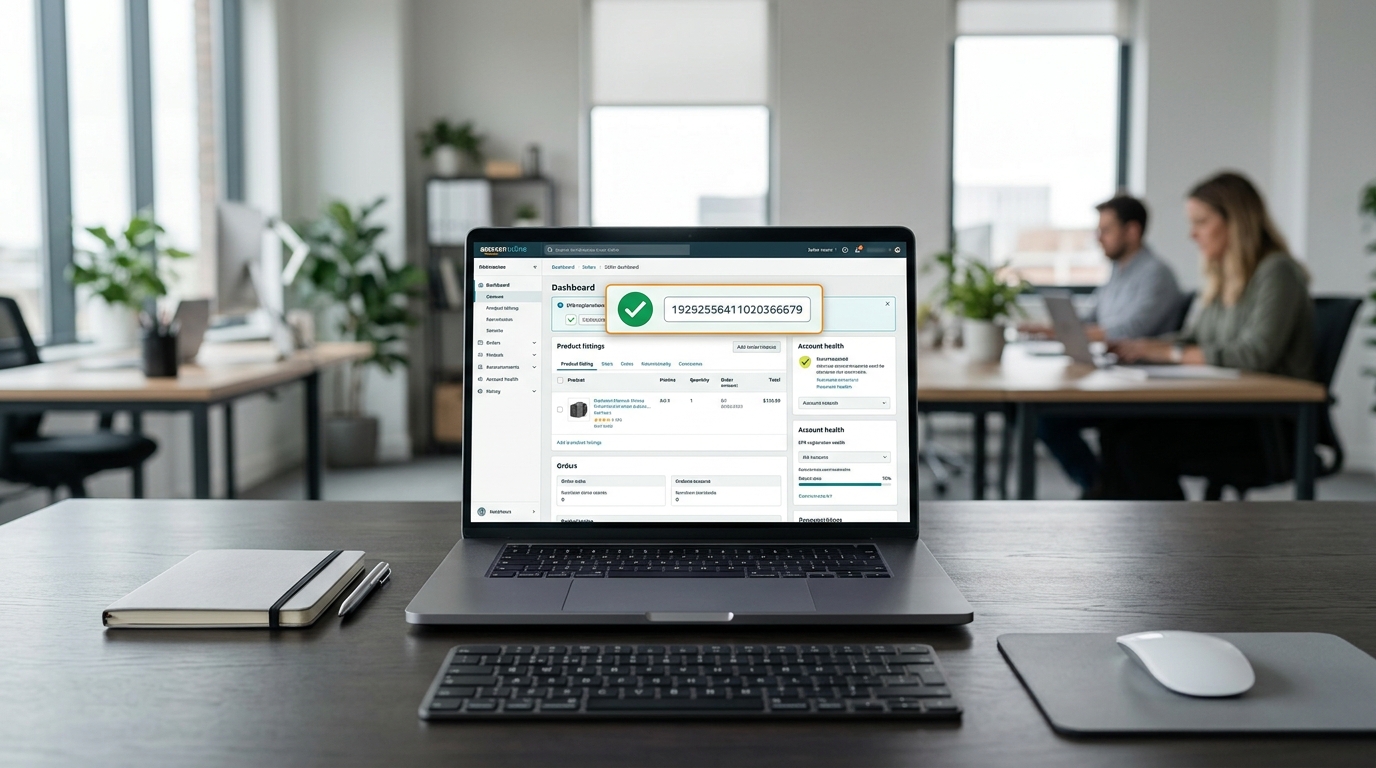
It helps to keep two layers apart, because they ask for different things. The one that asks for your EPR number is Article 45(4) of the Packaging and Packaging Waste Regulation (PPWR), Regulation (EU) 2025/40, which entered into force on 11 February 2025 and has applied generally since 12 August 2026[2]: a platform that lets consumers conclude distance contracts with producers has to obtain the producer's EPR registration number for each member state of sale and make best efforts to check it. The second layer is older and broader. Article 30 of Regulation (EU) 2022/2065, the Digital Services Act, obliges marketplaces to obtain and assess trader information before a seller can offer products to EU consumers, including a self-certification committing to offer only products that comply with Union law[1]. It covers who you are, not what you are registered for, and it has applied to all online platforms in the EU since 17 February 2024[3]. In practice the platform runs both checks in the same form, which is why a single dashboard prompt asks for your KVK number and your EPR number side by side.
| Regulation | Key milestone | Marketplace impact |
|---|---|---|
| Digital Services Act (EU) 2022/2065, Art. 30 | Applies to all online platforms in the EU since 17 February 2024 | Trader traceability: identity, registration data and a compliance self-certification |
| Packaging Regulation (EU) 2025/40 (PPWR), Art. 45(4) | Applies generally since 12 August 2026 | The platform must obtain your EPR registration number per member state of sale and check it |
| Battery Regulation (EU) 2023/1542 | EPR rules applied since August 2025 | Validation of battery producer registrations and take-back participation |
Are you affected? A quick test
Most Dutch companies selling physical items online fall within the scope of these marketplace checks. You are directly affected if you meet any of the following criteria:
- You sell physical products wrapped in sales, grouped, or shipping packaging on an online marketplace.
- You sell electrical or electronic appliances subject to WEEE producer obligations.
- You sell standalone batteries, accumulators, or devices with integrated energy storage.
- You sell cross-border from the Netherlands to customers in other EU member states.
If you already hold an active registration with Verpact for packaging in the Netherlands, or with Stichting OPEN for electrical equipment and batteries (Stichting OPEN and the administrative organisation of Stichting Batterijen, known as Stibat, combined their operations from 1 January 2024[4]), you have already completed key domestic steps. Selling across borders does not extend those registrations, though: Article 45(4) asks for a number per member state of sale, so each destination market is a separate registration.
There is an explicit no-case: if you operate strictly as a third-party fulfillment logistics partner or pure software vendor, and you never take legal title to the goods or act as the importer of record, you are generally not classified as the responsible producer. To verify your exact status across all sales channels, you can start the Digital needs analysis now.
What sellers are asked to provide
Marketplace portals collect this through a structured form in the seller dashboard. Four things are asked for, and it is worth preparing all four before the prompt appears, because a listing block is lifted only once the form validates.
- A national EPR registration number per regulated waste stream (packaging, WEEE, batteries) and per member state you sell into, not one number for the EU. For the Netherlands that is your Verpact registration for packaging and your Stichting OPEN registration for electronics and batteries.
- Proof of producer organisation membership or a system participation contract, which is what shows the number is backed by a live volume licence rather than a lapsed one.
- Company registration details that match your Chamber of Commerce (KVK) record and your VAT identification exactly. A trading name that differs from the registered name is the most common reason a form fails validation.
- For member states where you have no establishment, the details of your authorised representative, because that is the party under whose registration your goods are covered there.
Dutch sellers expanding into neighbouring markets must note that national registers remain strictly country-specific. Holding a Dutch registration does not satisfy requirements in other EU member states. For instance, selling to German consumers requires a separate registration in the LUCID packaging register maintained by the Zentrale Stelle Verpackungsregister (ZSVR): producers must apply to register themselves rather than through an agent, and registration is free of charge[5]. Since 12 August 2026 there is a second half to that: a producer without an establishment in Germany also has to name an authorised representative in LUCID, and without those details the registration cannot be completed[7]. The filing stays yours; the representation is what is new.
What has not changed
Marketplace verification in 2026 does not create new producer duties out of thin air. Extended Producer Responsibility has been an established legal obligation under Dutch and European environmental law for years.
In the Netherlands, the 2014 Packaging Management Decree (Besluit beheer verpakkingen 2014) already requires producers and importers bringing more than 50,000 kilograms of packaging onto the Dutch market in a calendar year to declare their volumes and pay waste management contributions to Verpact[6]. Below that you still keep the administration; what falls away is the declaration and the contribution. Similarly, electrical and electronic equipment has long required registration via the WEEE registration process.
What has changed is not the law itself, but the enforcement mechanism. Where compliance was previously monitored primarily through post-market inspections by national regulators, marketplaces now act as systematic gatekeepers at the point of sale.
Outlook: how the rules develop from here
Environmental compliance requirements continue to evolve across the European Union. While overarching milestones such as the phased application of the PPWR from August 2026 are established by European law, national implementation instruments and administrative reporting formats are still being refined.
Because implementation details remain subject to ongoing legislative adjustments, no general checklist can provide static certainty for every business setup. Which specific duties apply to your company depends directly on your exact operational role:
- Manufacturing goods under your own brand name.
- Importing packaged merchandise directly into the European Union.
- Sourcing pre-packaged goods from domestic wholesalers.
- Selling third-party merchandise under a private label.
These distinctions determine whether you qualify as a producer for one waste stream and a distributor for another. To understand your compliance position today and stay protected as regulations evolve, start the Digital needs analysis now.
Frequently asked questions
- Am I affected by this change?
- Yes, if you sell packaged goods, electrical items, or batteries via online marketplaces to consumers in the EU. Since 12 August 2026, Article 45(4) of the PPWR requires the platform to obtain and check your EPR registration number for each member state of sale. This applies whether you sell domestically in the Netherlands or export to other markets.
- What do I have to do before the date?
- That date has passed, so this is no longer preparation. You need a valid EPR registration number for every country you sell into and for every stream you sell in. For the Netherlands that means registering with Verpact for packaging and with Stichting OPEN for electronics and batteries, then entering those numbers in the platform form.
- What happens if I do nothing?
- The platform carries its own duty to check, so an unanswered form is its problem as much as yours. If you cannot supply a valid EPR registration number, bol.com and Amazon suspend the affected listings until you can, and the gap is closed country by country and stream by stream rather than all at once.
- Do these checks apply to cross-border sales?
- Yes. If a Dutch company sells into Germany via a marketplace, the platform will verify German EPR registrations, such as LUCID for packaging. Your Dutch Verpact registration does not cover exports to Germany, as each country maintains its own registers.
- Did the marketplaces invent these new rules?
- No. Your underlying EPR obligations have existed for years under national law. What changed on 12 August 2026 is that Article 45(4) of the PPWR makes the platform obtain and check your registration number instead of relying on a self-declaration. Dutch sellers above 50,000 kg of packaging were already declaring to Verpact.