The five-minute answer: you are a producer if any one of four triggers applies
Extended Producer Responsibility (EPR) requires companies that place physical goods on the Dutch market to take financial and operational responsibility for the collection, recycling, and waste processing of those products. In the Netherlands the system is called Uitgebreide Producentenverantwoordelijkheid (UPV), and the Human Environment and Transport Inspectorate (ILT) oversees compliance with it. Separate UPV schemes run per waste stream, including packaging[1] and clothing and household textiles[2], alongside electrical equipment and batteries. You qualify as a producer under Dutch law if your business meets any one of four operational triggers.
- You import products or packaging from outside the Netherlands and sell them on the domestic market, because an importer is defined as whoever sells goods coming from abroad to other traders or to end users[2].
- You manufacture goods in the Netherlands or have them made under your own brand, and packaging carrying your own name or logo counts as yours[3].
- You are the first company to sell a covered product in the Netherlands, which is how Dutch EPR defines a producer.
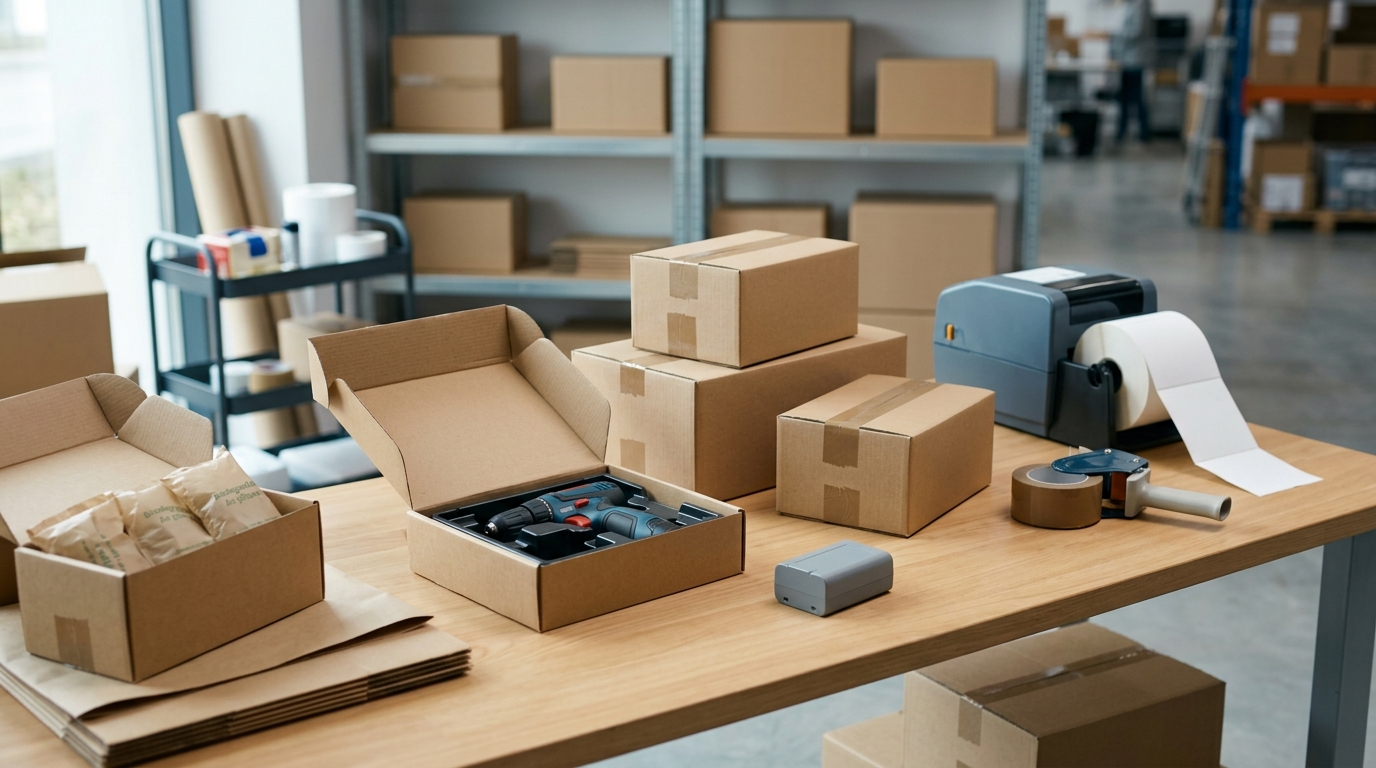
- You pack goods for shipment, since cartons, bubble wrap and strapping bands are listed as shipping packaging (verzendverpakking) within the packaging UPV[1].
The legal framework does not treat the term producer as a synonym for physical factory production. Under the Besluit beheer verpakkingen, anyone who professionally offers packaging on the Dutch market is a producer, and the sales technique used is explicitly not relevant: offering online falls under it too[1]. The same decree is the reference point on the government's own business portal, which frames extended producer responsibility as covering manufacturers and importers of packaging or packed products[3]. If you run a webshop from the Netherlands, adding a cardboard box and tape to ship an order makes you the producer of that shipping packaging. To evaluate how these rules apply across your entire catalogue, you can use our structured Digital needs analysis.
Trigger by trigger: how each of the four tests works in Dutch EPR law
Each trigger has its own legal anchor. For packaging, the Besluit beheer verpakkingen treats you as a producer if you professionally offer packaging on the Dutch market, and it distinguishes between sales packaging, grouped packaging and shipping packaging (verzendverpakking) such as cartons, bubble wrap and strapping bands[1]. Under the general Dutch EPR rules, producers are the parties that are first to sell a covered product in the Netherlands, and they must report annually to Rijkswaterstaat on the quantities they placed on the market. For electrical equipment and batteries, the same first-placement logic applies to finished units, with compliance administered collectively through Stichting OPEN. For textiles, the Besluit UPV textiel makes you a producer if you professionally offer newly manufactured clothing (including workwear) or household textiles on the Dutch market for the first time, whether to a retailer or straight to the end user, while second-hand textiles carry no producer duties[2]. If any single condition applies to your catalogue, you have statutory duties under the relevant Dutch EPR schemes.
Run the check on your own webshop: a product-by-product walkthrough
Knowing the four triggers is one thing; applying them to a real catalogue is another. Work through your product groups one supplier at a time and answer the same four questions for each of them.
Determining your compliance status requires evaluating your catalogue supplier by supplier. A company can act as a pure reseller for one product line while qualifying as a regulated producer for another. To establish where you stand, examine the legal origin and branding of every inventory category.
- Origin check: do you buy this product from a supplier outside the Netherlands? If yes, you are the importer placing it on the domestic market.
- Brand check: is your logo, trade name or private label on the item or its sales packaging? If yes, you carry producer responsibility whoever manufactured it.
- First-seller check: was your supplier the first to sell the product in the Netherlands, or are you? If it is you, the duties are yours.
- Fulfilment check: do you pack items into boxes, mailers, filler or tape before dispatch? If yes, you are a packaging producer for those shipping materials.
Almost every Dutch e-commerce business triggers packaging obligations through order fulfillment shipping packaging. Even when the primary product packaging was licensed upstream by a domestic wholesaler, the corrugated shipping boxes, bubble wrap and strapping bands you add are named in the decree's own list of verzendverpakking, one of the packaging types that falls within the Dutch packaging UPV[1]. For any packaging you bring onto the Dutch market, you must be able to show its weight and the materials it is made from[3].
| Sourcing scenario | Product branding | Producer status under Dutch EPR | Decisive legal test |
|---|---|---|---|
| Sourced from a Dutch wholesaler | Supplier brand / third-party brand | No for the product, yes for the shipping box | Your supplier was the first to sell the product in the Netherlands |
| Imported directly from a non-Dutch supplier | Any brand | Yes for product and all packaging | An importer sells goods that come from abroad to traders or end users |
| Manufactured by a third party to your specifications | Your own brand or private label | Yes for product and packaging | Packaging carries your own name or logo |
| Custom-packed orders shipped from your Dutch warehouse | Any product origin | Yes for the shipping materials | Cartons, bubble wrap and strapping count as verzendverpakking |
Review your purchase contracts to confirm where title passes. If your supplier delivers goods into the Netherlands under domestic tax and trade terms, they typically bear initial producer liability. If you purchase under terms where you import the goods across the Dutch border, producer duties transfer to your business immediately.
What a 'yes' means: your obligations per scheme at a glance
When one or more triggers apply to your operations, statutory producer duties take effect across the relevant Dutch EPR schemes. Those duties rest on each individual producer, but they can be met jointly: producers usually work together in a Producer Responsibility Organisation, and where the Minister for Infrastructure and Water Management has declared that organisation's system generally binding (an Algemeen Verbindend Verklaring, AVV), every producer must have its duties carried out through it. For packaging, such an AVV has been issued for Verpact, valid from 1 January 2023 through 31 December 2027[1].
For general packaging, Verpact administers the national compliance framework. Under the Besluit beheer verpakkingen 2014, producers that place packaging on the Dutch market must be able to show the weight and the material of that packaging[3]. Companies bringing more than 50,000 kilograms of packaging onto the Dutch market in a calendar year must in addition file an annual declaration and pay the packaging waste management contribution to Verpact[10]. That figure is a total across all packaging materials together, and above it the first 50,000 kg is still deducted from the invoice basis pro rata per material, so it works as an allowance rather than a cliff. Producers below the threshold are exempt from the notification and reporting duties and from the waste management contribution, but the exemption does not reach producers of single-use plastic packaging, who owe the contribution regardless of volume[1], and deposit-scheme packaging carries no threshold either[10].
| EPR stream | Governing organisation / Register | Key producer obligations | Statutory reporting / target milestone |
|---|---|---|---|
| Packaging | Verpact | Registration, weight administration, waste contributions | Contribution and annual reporting above 50,000 kg per calendar year |
| WEEE (Electrical & Electronic Equipment) | Stichting OPEN / Nationaal WEEE Register | Producer registration, periodic volume reporting, collection funding | Annual reporting and disposal financing |
| Batteries & Accumulators | Stichting OPEN (formerly Stibat) | Registration, collection infrastructure funding, reporting | Unified reporting via Stichting OPEN since 1 January 2024 |
| Textiles (Clothing & Household Textiles) | Stichting UPV Textiel (or ERP NL / CCT) | Notification to Rijkswaterstaat, annual reporting by 1 August | Annual report before 1 August; the scheme target rises from 50% of the previous year's weight prepared for reuse or recycled in 2025 to at least 75% in 2030 |
For electrical equipment and batteries, producers register via the Nationaal WEEE Register and report volumes to Stichting OPEN[4]. For consumer clothing and household textiles, the notification has to be filed within six weeks of the rules starting to apply to you, and every producer that has notified must submit an annual report to Rijkswaterstaat before 1 August; if you join a producer organisation, it handles both for you[2]. Cross-border sales bring separate national regimes: Germany, for instance, has its own registration duties.
Triggering producer status in the Netherlands activates three mandatory administrative duties: registration or notification, periodic volume reporting, and the payment of waste management contributions[5].
These obligations are handled through dedicated scheme operators and national registers for each stream:
- Packaging: notification to Rijkswaterstaat and annual volume declarations are handled through Verpact on your behalf. Producers staying below 50,000 kilograms of packaging per year are exempt from those notification and reporting duties and from the waste management contribution, though producers of single-use plastic packaging pay the contribution regardless of volume[1].
- WEEE (Electronics): Mandatory registration must be maintained in the Nationaal (W)EEE Register, with operational take-back organised through Stichting OPEN.
- Batteries: Portable batteries, loose or built into an appliance, are reported to Stichting OPEN, which absorbed the Stichting Batterijen operating organisation on 1 January 2024, so for them there is no separate battery organisation to join. Vehicle, light-means-of-transport and industrial batteries run outside that route through their own organisations.
- Textiles: producers of newly manufactured clothing and household textiles can meet the duties individually or affiliate with one of the three recognised producer organisations, Stichting UPV Textiel, European Recycling Platform Netherlands and Collectief Circulair Textiel, which then handle the notification and annual reporting for a financial contribution[2].
What a 'no' means, and the duties that remain anyway
If you source exclusively from domestic manufacturers or Dutch importers who have already registered their products, you are classified as a downstream distributor rather than a primary producer for those items. However, distributor status does not exempt your business from verification and documentation duties.
The Human Environment and Transport Inspectorate (ILT) enforces environmental compliance across Dutch commercial supply chains. Distributors must ensure that they do not market products from non-compliant or unregistered producers. To maintain an audit-ready compliance posture, your business should observe three standard operational controls.
- Collect written declarations or register numbers from your Dutch suppliers confirming their producer registration with Verpact, Stichting OPEN, or Stichting UPV Textiel.
- Archive commercial purchase invoices that verify the products entered your inventory via a registered Dutch distributor.
- Maintain a separate weight log for your own shipping packaging, which remains your direct producer responsibility regardless of product origin.
Note that cross-border trade introduces separate foreign regimes: selling into Germany, for example, requires a separate registration in the LUCID packaging register[6] as well as German registration for electrical equipment and batteries via stiftung ear[7]. Since 12 August 2026 the packaging half of that runs on the PPWR together with the German implementing act, the Verpackungsrecht-Durchführungsgesetz (VerpackDG), which replaced the Verpackungsgesetz[9]. Article 45(3) PPWR also requires a producer to appoint an authorised representative in every member state where it makes packaging available without being established there, so a Dutch webshop shipping to German consumers now needs one before it can complete its LUCID registration.
Retaining supplier documentation protects your business during official inspections and marketplace verification checks. Producers and importers that place EPR-covered products on the Dutch market must report to Rijkswaterstaat, and suspected free riders that never registered can be reported to the authorities, so an unregistered upstream supplier is a real risk to your own supply line.
Outlook: how the rules develop from here
Many operational details, national implementing decrees, and modulated tariff structures remain subject to forthcoming official publications. Changes to national administrative thresholds only take legal effect once enacted in Dutch statutory instruments such as the Besluit beheer verpakkingen on wetten.overheid.nl[8]. Because requirements evolve continuously, assessing your current compliance baseline is essential.
Environmental compliance frameworks are evolving rapidly across the European Union. The EU Packaging and Packaging Waste Regulation (PPWR, Regulation (EU) 2025/40) entered into force on 11 February 2025 and has applied generally since 12 August 2026[9]. It is in force today: it brings standardised packaging definitions, recyclability performance requirements and stricter documentation duties across all member states, and under Article 45(4) an online platform must obtain your extended producer responsibility registration number for each member state of sale and check it before it lets your listing run.
At the national level, implementation details, reporting thresholds, and fee structures are regularly updated by Dutch ministries and producer responsibility organisations. Many administrative specifics for coming years remain open pending final delegated acts and national ministerial decrees.
Which obligations apply depends on your exact role in the chain for each scheme: who manufactures, imports, sources from Dutch suppliers, or sells under an own label is a producer for one regime and not for another. These distinctions cannot reliably be resolved through a general checklist alone.
To understand your compliance position today and be on the safe side, run our EPR needs analysis now. ClearoSystems provides the Digital needs analysis to evaluate your specific setup, after which our team supports you in implementing the requirements and keeping your business covered as regulations evolve.
Frequently asked questions
- Which EPR scheme applies to what I sell?
- It depends on the product and its packaging. Almost every webshop must register with Verpact for shipping packaging. If you sell electronics, you fall under the WEEE rules, and portable batteries are reported to Stichting OPEN as well, because Stichting Batterijen was merged into it on 1 January 2024. For clothing and household textiles you register with Rijkswaterstaat and may then join a producer organisation such as Stichting UPV Textiel.
- Who counts as the producer in my setup?
- You are the producer if you import the product onto the Dutch market, sell it under your own brand, or are the first to sell a foreign product in the Netherlands. Additionally, packing goods for shipping makes you a producer for the packaging materials.
- Where do I start if none of this has been arranged yet?
- Start by assessing your exact role in the supply chain for each product category. Identify which of the four triggers apply to your operations. Then, run a digital needs analysis to determine your specific obligations before registering with the respective producer responsibility organisations.
- Do these EPR rules apply if I only sell B2B?
- Yes, EPR obligations apply to B2B sales as well, though the specific requirements (like return concepts instead of consumer guarantees) may differ. For instance, WEEE distinguishes between B2B and B2C, but producer registration and reporting remain mandatory for both.
- How often should I re-run the EPR self check?
- You should re-evaluate your producer status whenever your business model changes. This includes importing from a new non-EU supplier, launching your own brand, or expanding into new product categories like electronics or textiles.
- Are second-hand goods subject to extended producer responsibility?
- Generally, if the second-hand goods were already placed on the Dutch market by a registered producer, they do not trigger new EPR obligations for you. However, if you import second-hand goods from abroad and are the first to place them on the Dutch market, you become the producer.