EPR in the Netherlands: four schemes at a glance
Extended Producer Responsibility (EPR) obliges producers and importers to organize and finance the collection, sorting, and recycling of waste originating from their products. Anyone placing physical goods on the Dutch market must identify their regulatory role and register with the appropriate scheme operator. Understanding which of the national statutory frameworks apply to your product catalog is the first step toward full compliance.
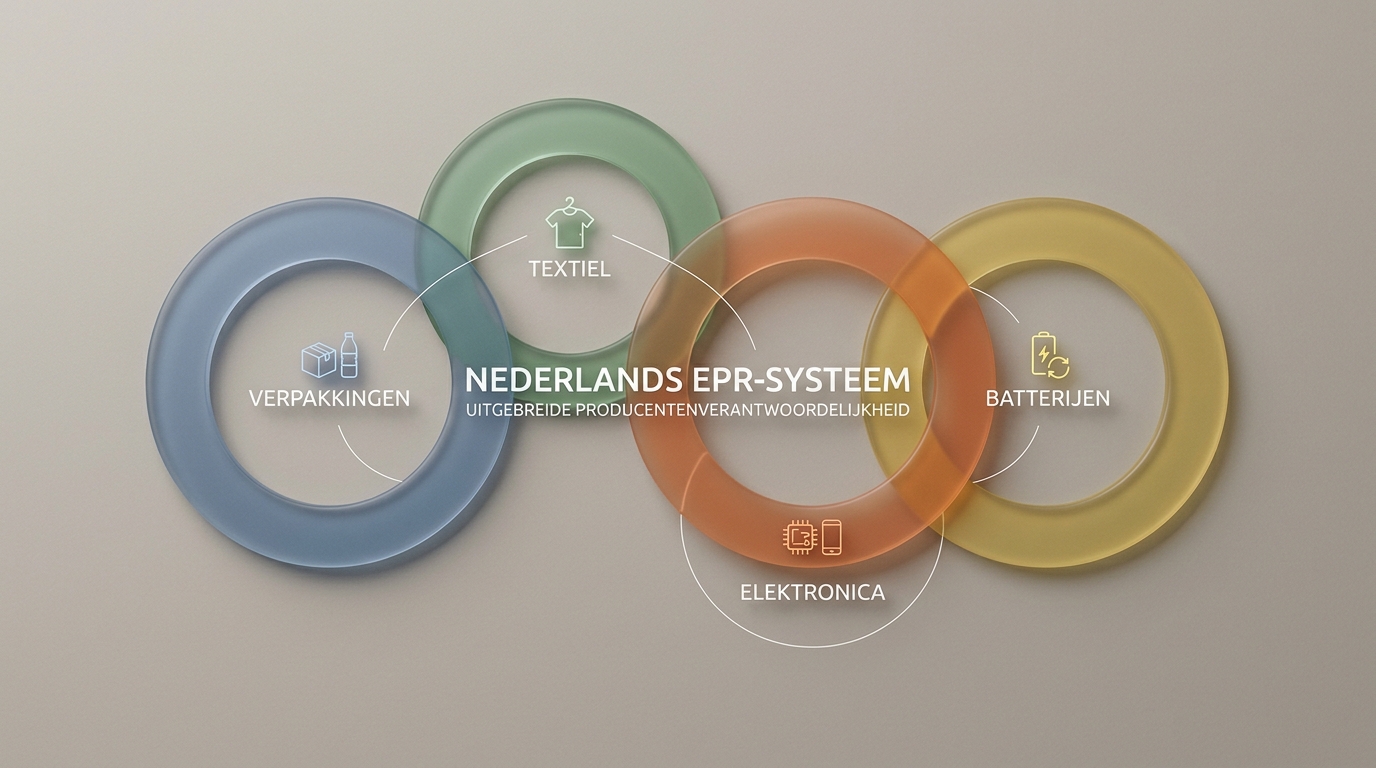
In the Netherlands, a mandatory EPR (uitgebreide producentenverantwoordelijkheid, UPV) applies to a defined set of product groups, each with its own obligations, and you count as a producer if you make such a product in the Netherlands or introduce it onto the Dutch market for the first time as an importer[1]. Four of these schemes directly affect modern commercial enterprises and e-commerce merchants: packaging, textiles, electrical and electronic equipment, and batteries. The Human Environment and Transport Inspectorate (Inspectie Leefomgeving en Transport, ILT) oversees compliance with EPR regulations in the Netherlands[2]. Note that cross-border sales into other EU Member States, such as Germany, trigger separate national registrations under local regulations like the VerpackDG or the ElektroG.
- Packaging: Regulated under the 2014 Packaging Management Decree and operated by Verpact.
- Textiles: Governed by the 2023 Textile EPR Decree and coordinated primarily by Stichting UPV Textiel.
- Electronics (WEEE): Covered by Dutch WEEE regulations and managed collectively by Stichting OPEN.
- Batteries: Governed by battery regulations and coordinated by Stichting OPEN, which took over the Stichting Batterijen operating organisation on 1 January 2024.
Determining your exact role in the supply chain for each product group dictates whether you carry primary producer duties or secondary reporting responsibilities.
Packaging: Verpact and the weight-based fee system
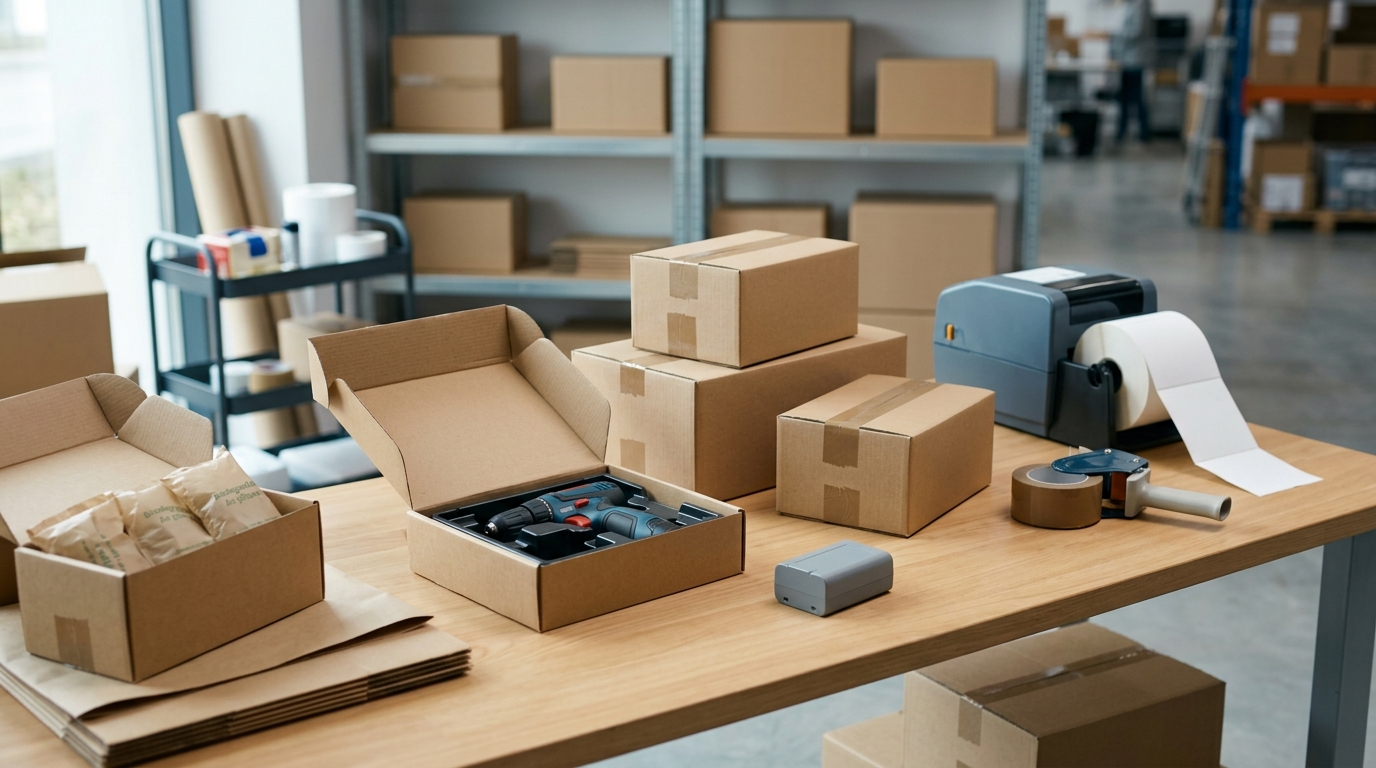
Packaging compliance in the Netherlands is governed by the Packaging Management Decree 2014 (Besluit beheer verpakkingen 2014). Producer organisation Verpact runs the collective system: producers and importers report the packaging they place on the Dutch market and pay the packaging waste management contribution to Verpact[3]. Companies that manufacture, import, or place packaged goods on the Dutch market carry legal responsibility for managing that packaging until the waste phase[3].
Under current Dutch rules, a statutory weight threshold applies. Companies that bring more than 50,000 kilograms of packaging material onto the Dutch market in a calendar year must report that quantity and pay the packaging waste management contribution to Verpact, and must also submit a report on their prevention and recycling measures through Verpact every year before 1 August[3]. Companies below that threshold are not caught by the contribution and reporting duty, though anyone bringing packaging onto the Dutch market must still be able to show the weight of that packaging and the materials it is made from[3].
| Regulatory Element | Current Requirements (2024–2025) | Upcoming EU/NL Developments |
|---|---|---|
| Primary Operator | Verpact | Verpact plus a future national producer register |
| Annual Volume Threshold | 50,000 kg of packaging material | Expected to lapse once register rules apply; no Dutch date fixed |
| PPWR Application Date | Not applicable | Conformity duties apply from 12 August 2026 |
The European Packaging and Packaging Waste Regulation (PPWR) applies its first obligations from 12 August 2026: packaging manufacturers must have completed a conformity assessment and drafted a conformity statement, and every company must determine its role or roles in the packaging chain, because that role and the type of packaging decide which duties bite[4][5]. Not all rules have been finalised; the EU will continue to work the PPWR out over the coming years, with further rules introduced up to and including 2029[4]. Mandatory registration in a national producer register is expected to follow later, but no Dutch implementing instrument fixing a date has been published, so treat that step as unsettled. The 50,000 kg threshold under the 2014 decree is the rule in force today[3].
Textiles: Stichting UPV Textiel
Extended Producer Responsibility for textiles came into effect in the Netherlands on 1 July 2023 under the Textile EPR Decree (Besluit UPV Textiel)[6]. The regulation applies to all producers and importers who professionally place consumer clothing, workwear, bed linen, table linen, or household linen onto the Dutch market for the first time.
Unlike the packaging regime, the Dutch textile EPR scheme operates without any minimum volume threshold. Bringing a single commercial garment or piece of household textile onto the Dutch market triggers immediate registration and reporting obligations. Registration itself runs through Rijkswaterstaat; from there a producer either meets the duty individually or joins a recognised producer organisation. Stichting UPV Textiel is the largest recognised Producer Responsibility Organisation (PRO) in the Netherlands, alongside other recognised schemes like European Recycling Platform Netherlands and Collectief Circulair Textiel. Producers may also choose individual compliance, though collective participation is standard.
- Annual registration and volume declaration for all clothing and linen placed on the Dutch market.
- Payment of per-kilogram waste management contributions based on material weight and category.
- Financing and organising collection, reuse, and high-value fiber-to-fiber recycling systems.
- Meeting statutory circularity targets: in 2025 at least 50% of the weight placed on the market the previous year must be prepared for reuse or recycled, with the targets rising each year up to 2030[7].
Importers and distance sellers shipping garments directly to Dutch end-consumers carry full producer status under the 2023 decree and must fulfill reporting requirements annually.
Electronics and batteries: both run by Stichting OPEN
Electrical and electronic equipment and batteries run as separate EPR tracks in the Netherlands, and the two frequently overlap for modern consumer goods. Obligations for electrical appliances follow from the Dutch WEEE rules (Regeling afgedankte elektrische en elektronische apparatuur)[8]. Waste Electrical and Electronic Equipment (WEEE) is managed collectively by Stichting OPEN, which coordinates registration, waste collection, and recycling for all categories of electrical appliances and lighting equipment, with producers and importers recorded through the Nationaal (W)EEE Register[9].
Batteries have their own EPR track. Producers and importers who place EPR-covered products such as portable batteries on the Dutch market must report to Rijkswaterstaat every year, stating the quantity of products they sold and how much waste they collected, and depending on the product group how much of that waste went into new products[2]. Collective compliance for battery producers and importers is coordinated by Stichting OPEN: since 1 January 2024 it also fulfils producer responsibility for batteries, after the Stichting Batterijen operating organisation (Stibat Services) was merged into it. There is no longer a separate battery organisation to join. Any company that imports battery-powered gadgets, electronic toys, or power tools places both an electronic appliance and a battery onto the market at the same time.
| Product Category | Governing Framework | Primary Collective Organisation | Threshold / Duty |
|---|---|---|---|
| Electrical & Electronic Equipment | WEEE Directive / Dutch WEEE Decree | Stichting OPEN | No minimum threshold; mandatory registration from first unit |
| Portable & Industrial Batteries | EU Battery Regulation / Dutch Battery Decree | Stichting OPEN | No minimum threshold; mandatory registration and reporting |
Webshops selling multi-component products must ensure that each embedded component is correctly categorized and declared to the respective organisation to prevent double counting or missed reporting.
What this means for your webshop and how rules develop
Operating an e-commerce business or product distribution network in the Netherlands requires a systematic, product-based audit to map every SKU against the four EPR categories. A single commercial product, such as a battery-powered smart garment delivered in a cardboard box, can trigger packaging, textile, electronic, and battery obligations simultaneously.
- Identify the outer and primary packaging materials and track annual volume against the 50,000 kg threshold.
- Categorise all apparel and household linens to calculate total kilogram weight for textile declarations.
- Isolate all electronic devices and lighting items for registration with Stichting OPEN.
- Account for all integrated, removable, or enclosed batteries for separate battery reporting.
Regulatory frameworks at both the European Union and Dutch national levels continue to evolve rapidly. While the direction toward increased producer accountability and digital register integration is clear, specific implementation details, future fee structures, and administrative procedures remain subject to ongoing legislative development. General checklists cannot capture how individual supply chain structures interact with these shifting requirements.
Which obligations apply depends on your exact role in the supply chain for each scheme: who manufactures, imports, sources from Dutch suppliers, or sells under an own label is a producer for one regime and not for another. These distinctions cannot reliably be resolved through a general checklist alone. To understand your compliance position today, start the Digital needs analysis now. After that, our experts at ClearoSystems support you in implementing the requirements and keep you covered as rules evolve.
Frequently asked questions
- Which scheme applies to what I sell?
- It depends on your product. Electronics and batteries both fall under Stichting OPEN, which has run battery compliance since 1 January 2024. Clothing falls under the Dutch textile EPR, where you register with Rijkswaterstaat and may then join a producer organisation such as Stichting UPV Textiel; all product packaging falls under Verpact.
- Who counts as the producer in my setup?
- You are generally considered a producer if you manufacture a product in the Netherlands, or if you introduce it to the Dutch market for the first time as an importer.
- Where do I start if none of this has been arranged yet?
- Begin by listing the product groups subject to Dutch EPR that match your assortment. Clarify your role in the supply chain, then register with the corresponding organisations.
- Does the 50,000 kg packaging threshold still apply?
- Yes, the threshold remains in force today. It is expected to lapse once the PPWR producer register and its reporting duties apply in the Netherlands, but that date is not yet fixed in Dutch law.
- Can one product fall under multiple EPR schemes?
- Yes. An electronic device with an internal battery shipped in a cardboard box triggers obligations for electronics, batteries, and packaging simultaneously.