Dutch registration depends on product and role
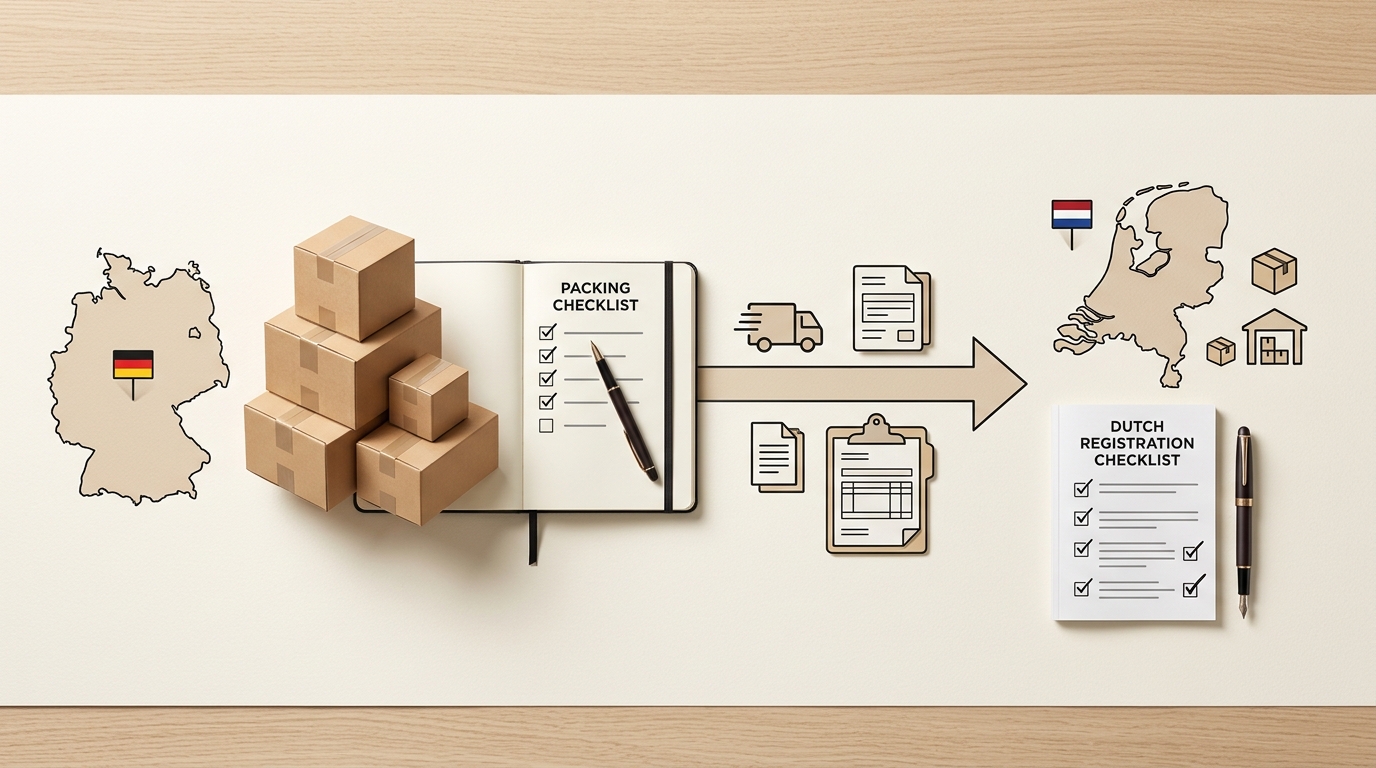
Yes: if, as a German seller, you sell packaged products at a distance directly to end users in the Netherlands, you may count as a producer there. Article 1, subparagraph g, of the Besluit beheer verpakkingen 2014 expressly names any person established abroad who, in a professional capacity, sells packaged products to consumers in the Netherlands through distance contracts.[1] The European PPWR, applicable since August 2026, also covers distance sales to business end users who do not resell the goods in the form supplied. Whether this leads to registration with Verpact and an obligation to pay contributions, however, depends on two things: the quantity you place on the market in the Netherlands per calendar year, and the type of packaging.
Dutch extended producer responsibility, called UPV in Dutch, is regulated per product stream. Packaging, electrical equipment, batteries and, most recently, new textiles each follow their own rules, their own registers and their own thresholds. This article covers packaging. For the other areas, a short pointer is enough here: check electrical equipment and batteries separately if your product range includes them. How obligations combine per target country and product stream is something we have described separately for EPR in other EU countries.
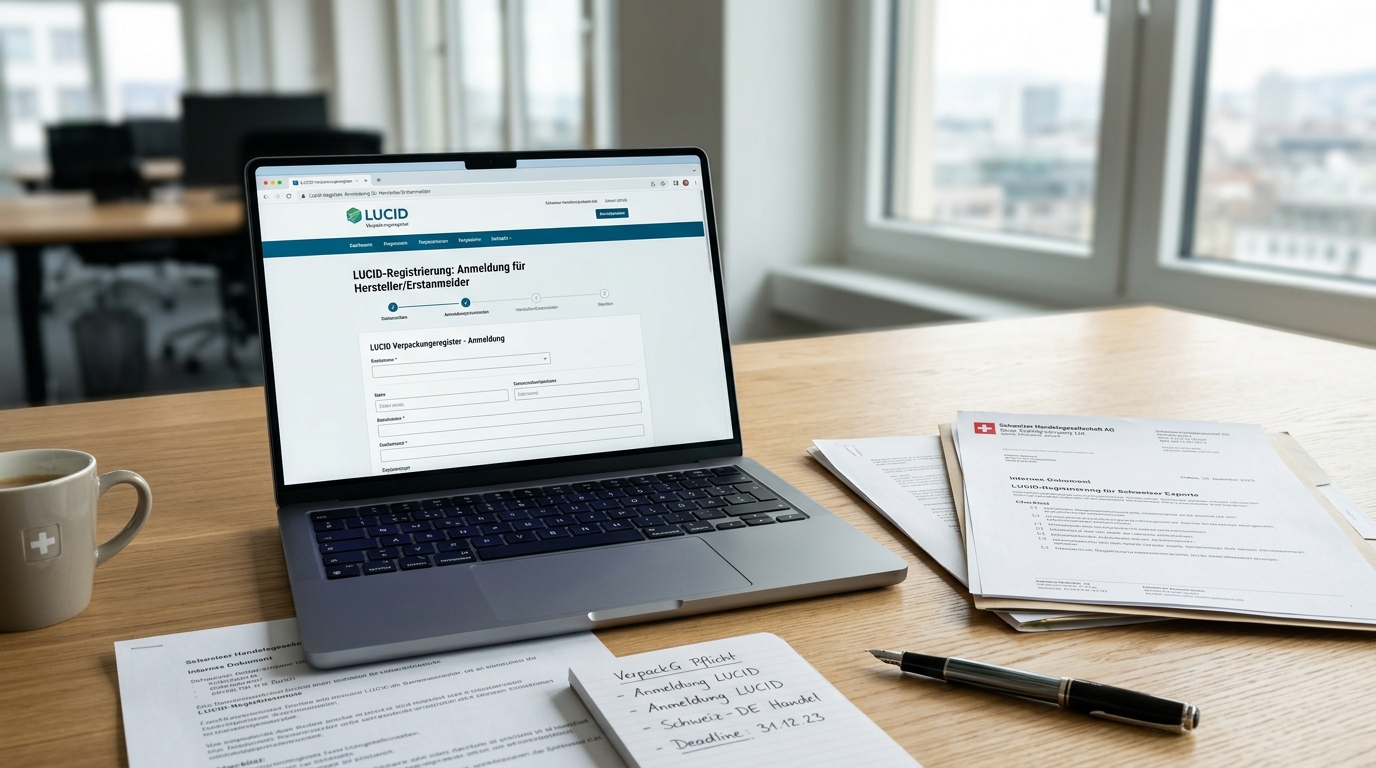
An important distinction up front: your LUCID registration applies only to Germany. It does not replace a Dutch registration. Which obligation arises always depends on the specific combination of product, role, sales channel and target country.
- Packaging: a separate mandatory area with an exemption threshold and exceptions, covered in this article.
- Electrical equipment and batteries: separate Dutch mandatory areas with their own registers and reporting channels, only a pointer here.
- Textiles: a new Dutch mandatory area for certain textile products, only a pointer here.
When are you responsible for packaging in the Netherlands?
What matters is your customer's location, not the place of dispatch. The Dutch rules focus on offering packaging on the Dutch market in a professional capacity; the sales technique used is irrelevant, and offering online is expressly included. A German webshop that delivers to Dutch households therefore places the packaging on the market in the Netherlands for the first time.
When you count as a producer
The Besluit beheer verpakkingen distinguishes several producer constellations. For a German seller with sales to the Netherlands, these cases are the most relevant:
- You sell packaged products at a distance directly to end users in the Netherlands. These can include both consumers and business end users who do not resell the goods in the form supplied.
- You import packaged products into the Netherlands in a professional capacity, for example through your own storage or a supply arrangement in which you import yourself.
- You have packaging made with your name, logo or brand, or commission this, for example for own-brand packaging.
- You place packaging on the market that is only added to the product at the point of sale, for example shipping boxes and service packaging.
For the packaging exemption threshold and its exceptions, you first need to clarify your role: producer, importer, reseller or authorised representative lead to different obligations. A general checklist cannot assess your situation conclusively, especially not for own brands, imports or mixed sales channels. A ClearoSystems needs analysis determines which role applies to you and which steps follow from it.
Besides the role, the quantity counts. Record how many kilograms of packaging you deliver to Dutch customers per calendar year, and separate the types of packaging as you do so. This figure decides the exemption threshold in the next section.
Packaging exemption threshold and exceptions at Verpact
Verpact is the Dutch producer organisation for packaging. Verpact's packaging UPV system has a declaration of general applicability (Algemeenverbindendverklaring, AVV). As a result, Verpact fulfils the corresponding collective producer responsibility obligations for the producers covered, and the producers pay a waste management contribution for this.
The key threshold is 50,000 kg per calendar year.[2] Producers who place no more than 50,000 kg of packaging on the market in the Netherlands are exempt from notification and reporting obligations and from the contribution. Producers above this quantity must make themselves known to Verpact. Verpact expressly confirmed this threshold on 17 August 2026, after the PPWR entered into application. The following table sorts the constellations:
| Constellation | Consequence at Verpact |
|---|---|
| No more than 50,000 kg per calendar year, no single-use plastic packaging and no beverage packaging subject to a deposit | Exempt from registration, quantity reporting and contribution |
| No more than 50,000 kg, including packaging subject to the Dutch SUP rules | No 50,000 kg exemption threshold: notification and contribution regardless of the total quantity[3] |
| Beverage packaging subject to a deposit (statiegeld) in the product range | No 50,000 kg exemption threshold: notification and contribution regardless of the total quantity[3] |
| More than 50,000 kg per calendar year | Registration with Verpact, quantity reporting and waste management contribution |
In practice, this means: check each type of packaging separately from the total quantity, because the exemption threshold only applies to the regular materials. Which obligation is triggered in an individual case follows from which row of the table you fall into.
The amount of the contribution depends on the packaging material. Verpact sets the material rates annually; the rates for 2027 apply from 1 January 2027, with plastic, glass, paper and cardboard, wood and most metals unchanged from 2026, while beverage cartons and aluminium go up.[4] How to structure such cost blocks for several countries is shown in our article on calculating packaging costs.
Outlook: what still needs to be confirmed
The Packaging Regulation, Regulation (EU) 2025/40, has been in force since 11 February 2025 and applicable since 12 August 2026.[5] It changes the framework for producers in all Member States, including for distance sales: anyone who sells packaged products at a distance directly to end users in another Member State may be a producer there within the meaning of the PPWR, regardless of whether the sale takes place via their own webshop or via an online marketplace.
Since 12 August 2026, the PPWR has also applied. For businesses that sell from one EU Member State directly to end users in another Member State, Art. 45(3) in principle requires an EPR authorised representative established there. The European Commission has proposed suspending this obligation until 2035; this proposal has not yet been adopted. For the Netherlands, Verpact currently points out that EU businesses which do not need to register with Verpact because of the 50,000 kg threshold also do not need to appoint an EPR authorised representative for packaging UPV. The specific Dutch implementation should therefore be checked against the respective quantity and packaging constellation.
Second, the Dutch exemption threshold remains in place. The consolidated Besluit beheer verpakkingen 2014 still contains it, Verpact confirmed it on 17 August 2026, and the Dutch authority Rijkswaterstaat continues to apply it. The PPWR has not abolished this threshold. We are keeping an eye on how register procedures and representation obligations will take shape in the Netherlands, and will flag changes as soon as they are adopted.
From what has been said so far, a clear order follows for your next steps:
- Clarify sales channel and role: do you sell directly to Dutch end users or to a reseller? Consider your own webshop, marketplace, own brand and import separately.
- Classify your packaging: distinguish regular packaging, single-use plastic packaging relevant under the SUP rules and beverage packaging subject to a deposit.
- Determine quantities: record the kilograms of packaging made available in the Netherlands per calendar year.
- Check the 50,000 kg threshold and exceptions: derive registration, reporting and contribution at Verpact from this.
- Check the authorised representative and other EPR obligations: in particular, assess electrical equipment, batteries and, where applicable, other product areas separately.
This describes the standard case. It does not hold in every constellation: for own brands, imports from third countries, complex supply chains, or if you sell via marketplaces alongside your own webshop, the role allocation may turn out differently. Answers to common follow-up questions can be found in our FAQ overview.
Packaging obligations in the Netherlands are only part of your possible EPR obligations. With the ClearoSystems needs analysis, you get a complete overview of which obligations arise for your products, roles, sales channels and target countries. This shows you whether you need to register in the Netherlands, which other EPR obligations exist and where action is needed, before this leads to sales restrictions or other problems.
Frequently asked questions
- Do I have to register with Verpact if I sell from Germany to the Netherlands?
- Yes, as a German online seller selling directly to Dutch end users, you count as a foreign producer. For regular packaging quantities below 50,000 kg per year, however, an exemption threshold applies to reporting obligations and contributions.
- Does my LUCID registration also cover sales to the Netherlands?
- No, the German LUCID register and participation in a dual system only cover packaging that arises in Germany. For the Netherlands, you must meet the requirements of the Besluit beheer verpakkingen and Verpact there separately.
- From what quantity do I pay packaging contributions in the Netherlands?
- For most types of packaging, you only pay an Afvalbeheerbijdrage (waste management contribution) to Verpact from an annual quantity of more than 50,000 kg. Exceptions are single-use plastics (SUP) and deposit packaging, for which contributions are due from the first item.