The direct answer: why you are the responsible party
In a dropshipping model where your supplier is located outside the European Union and ships directly to Dutch consumers, you are legally the producer and bear full Extended Producer Responsibility (EPR). The obligation does not shift to the overseas factory or the international courier. Dutch government guidance states that EPR applies to companies that sell products in the Netherlands for the first time, and that producers are usually importers or manufacturers based in the Netherlands[1]. The Human Environment and Transport Inspectorate (ILT), which oversees compliance with EPR regulations in the Netherlands, defines producers as the companies and private individuals who are the first to sell products that fall under EPR in the Netherlands, and requires producers or importers placing such products on the Dutch market to report annually to Rijkswaterstaat[2]. Because your Dutch webshop acts as the seller of record and presents the offer to the end customer, you are the party first placing the product on the Dutch market.
If your operating setup involves varying supplier locations or changing product ranges, a general assumption does not guarantee compliance. You can run a structured Digital needs analysis to clarify which legal roles and registration duties apply to your specific sales model.
Extended Producer Responsibility focuses on commercial placement rather than the physical handling of parcels. Dutch guidance says the EPR applies to all suppliers who offer a product on the market for the first time, that it does not matter to whom the product is first offered (a business that resells it, such as a middleman or a retailer, or the end user), and it lists foreign online suppliers who sell to end users in the Netherlands without the intervention of an importer among the parties that count as producers[1]. Enforcement in the Netherlands sits with the Human Environment and Transport Inspectorate (ILT), which oversees compliance with EPR regulations and lets anyone report a producer or importer suspected of not having registered with Rijkswaterstaat[2]. A direct postal dispatch from a foreign warehouse therefore does not transfer these statutory duties to an entity outside EU jurisdiction.
When the answer flips: EU-based suppliers
What if your situation is slightly different, or you work with multiple supply channels? To identify where your business stands across Dutch EPR schemes, you can start the EPR needs assessment to establish which roles apply to your catalog.
The exception to seller liability arises when your dropshipping supplier is established inside the European Union and has already placed the goods on the Dutch market as the registered producer or importer. Dutch guidance ties the duty to offering a product on the Dutch market for the first time, names importers in the Netherlands among the parties that count as producers, and treats a foreign online supplier as the producer where it sells to Dutch end users without the intervention of an importer[1]. Where that first placing has demonstrably happened upstream, the duty is not triggered again at your sale.
However, you cannot simply assume an EU supplier is compliant. The legal burden of proof remains with your business when inspected. If the supplier fails to register or report the quantities, environmental authorities treat the domestic seller as non-compliant until verified proof is established.
The responsibility shifts away from you only when an intermediary or domestic supplier has already placed the goods on the Dutch market before the sale to the consumer. If you work with a supplier based in the Netherlands who sources or manufactures the items locally, that supplier is typically the primary producer responsible for initial registration and fee settlement.
| Supplier Location | Supplier Registration Status | Responsible Party for Dutch EPR | Required Proof |
|---|---|---|---|
| Non-EU (e.g. China, US) | Not registered in NL | Dutch Webshop (You) | Import documentation and your own registration with the relevant producer organisation |
| EU Member State | Registered in NL and actually declaring the units it ships for you | EU Supplier | Written confirmation, official registration numbers, and confirmation that your volumes are inside its declaration |
| EU Member State | Not registered in NL | Dutch Webshop (You) | Your own registration with the competent Dutch schemes |
To rely on this exemption safely, you must be able to verify and prove that the upstream party has fulfilled all producer duties. You cannot assume compliance based on verbal assurances or generic supplier terms. You need checkable commercial criteria in your operational records:
To rely on an EU supplier's compliance, you must obtain formal written confirmation containing their official registration numbers for each applicable waste stream before placing products on the market. A registration number on its own is not the answer to your question: the supplier can be properly registered for its own placements and still not be declaring the units it drop-ships on your behalf, and it is those units the inspector will ask you about.
- Clear commercial terms (such as delivery terms where title passes within the EU) identifying the supplier as the primary importer.
- Written confirmation from the supplier explicitly confirming their producer status for the supplied product lines.
- Valid Dutch EPR registration details from the supplier, checkable in the relevant registers: Verpact for packaging, and for electrical equipment the Nationaal (W)EEE Register, where registration with Stichting OPEN also carries out the producer's registration in the register[3].
- Itemised invoices that distinguish compliant domestic stock from direct overseas dropshipping consignments.
If your EU-based supplier dropships on your behalf but is not registered in the Netherlands and does not report the volumes, nobody upstream has placed those goods on the Dutch market, so the duty is yours on the sale you conclude.
Grey zones: marketplaces, mixed sourcing and distance selling
When dropshipping across European borders, national regimes remain strictly territorial. Selling to a German customer triggers LUCID registration and system participation from the very first parcel, with no de minimis threshold and no way for a third-party dropshipper to carry your compliance across the border for you[7].
Complex supply setups create split obligations that must be tracked per order line rather than assumed across the entire catalog. Selling through an online marketplace does not move the duty off you: since 12 August 2026 Article 45(4) of the PPWR requires the platform to obtain your extended producer responsibility registration number for each member state of sale and to make best efforts to check that it is complete and reliable before it lets you sell[6]. That is a verification duty on the platform, not a transfer of producer status to it, and no Dutch rule makes a marketplace the producer in your place.
- Marketplace sales: EU marketplaces must obtain and check an EPR registration number per member state of sale under Article 45(4) PPWR, and block the listing where they cannot[6].
- Cross-border fulfillment: Exporting goods from Dutch stock or non-EU drop locations to other EU countries requires separate registration in each target destination, and under Article 45(3) PPWR an authorised representative in every member state where you make packaging available without being established there[6].
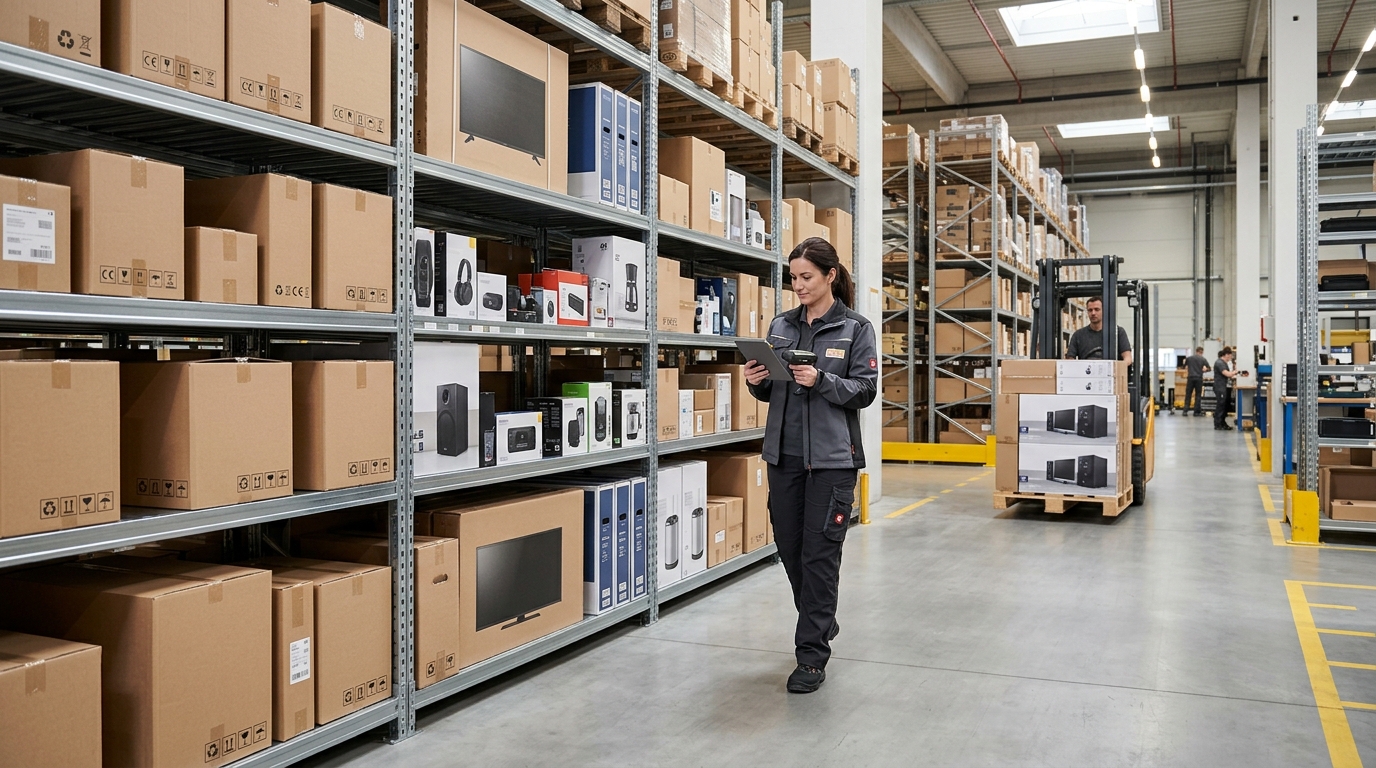
- Multi-stream products: An electronic device with a rechargeable battery requires compliance across three separate Dutch EPR schemes covering packaging, WEEE, and batteries.
Mixed sourcing models are particularly common in growing e-commerce businesses. If your store fulfills sixty percent of orders via non-EU dropshipping and forty percent via a compliant Dutch distributor, your EPR reporting is split: you report and license only the volume originating from the non-EU direct route, while maintaining proof of prior licensing for the domestic share.
Selling across borders adds another layer of regulation: if your Dutch webshop dropships products to buyers in Germany, Dutch registrations do not cover those shipments. Cross-border sales into Germany require separate registrations under German packaging and electronics law, and since 12 August 2026 the packaging half of that runs on the PPWR together with the German Verpackungsrecht-Durchführungsgesetz (VerpackDG), which replaced the Verpackungsgesetz. A producer with no establishment in Germany must name an authorised representative there, without which the LUCID registration cannot even be completed[7].
What to do next: fix responsibility and register
To ensure your dropshipping business operates lawfully in the Netherlands, establish a clear compliance workflow across your supply chain:
For packaging, a financial threshold applies, and it is worth being precise about what it does and does not switch off. Producers and importers that bring more than 50,000 kilograms of packaging material onto the Dutch market must pay the packaging waste management fee to Verpact and report the weight and quantity of that packaging annually, and this also applies to companies selling directly online to Dutch consumers[4]. The figure counts all materials together, and above it the first 50,000 kg is deducted from the invoice basis pro rata per material, so it is an allowance rather than a cliff. Below it you are still the producer and still have to be able to show the weight and material of your packaging; what falls away is the notification, the annual report and the contribution, and even that exemption does not reach single-use plastic or deposit-scheme packaging. For electrical and electronic equipment, producers and importers do not register directly with the Nationaal (W)EEE Register but join Stichting OPEN, and that affiliation includes their registration in the register[3].
- Map every supplier route by recording the origin country of the dispatch, the contractual seller, and whether the goods clear customs directly to the consumer.
- Request written compliance declarations and Dutch producer registration numbers from all domestic and EU suppliers.
- Register your business for all streams where you source from non-EU dropshippers: packaging types with Verpact, and electrical equipment by registering with Stichting OPEN, where you then report annually on the appliances, lamps and batteries you place on the Dutch market and pay a waste management contribution[5], plus batteries where applicable.
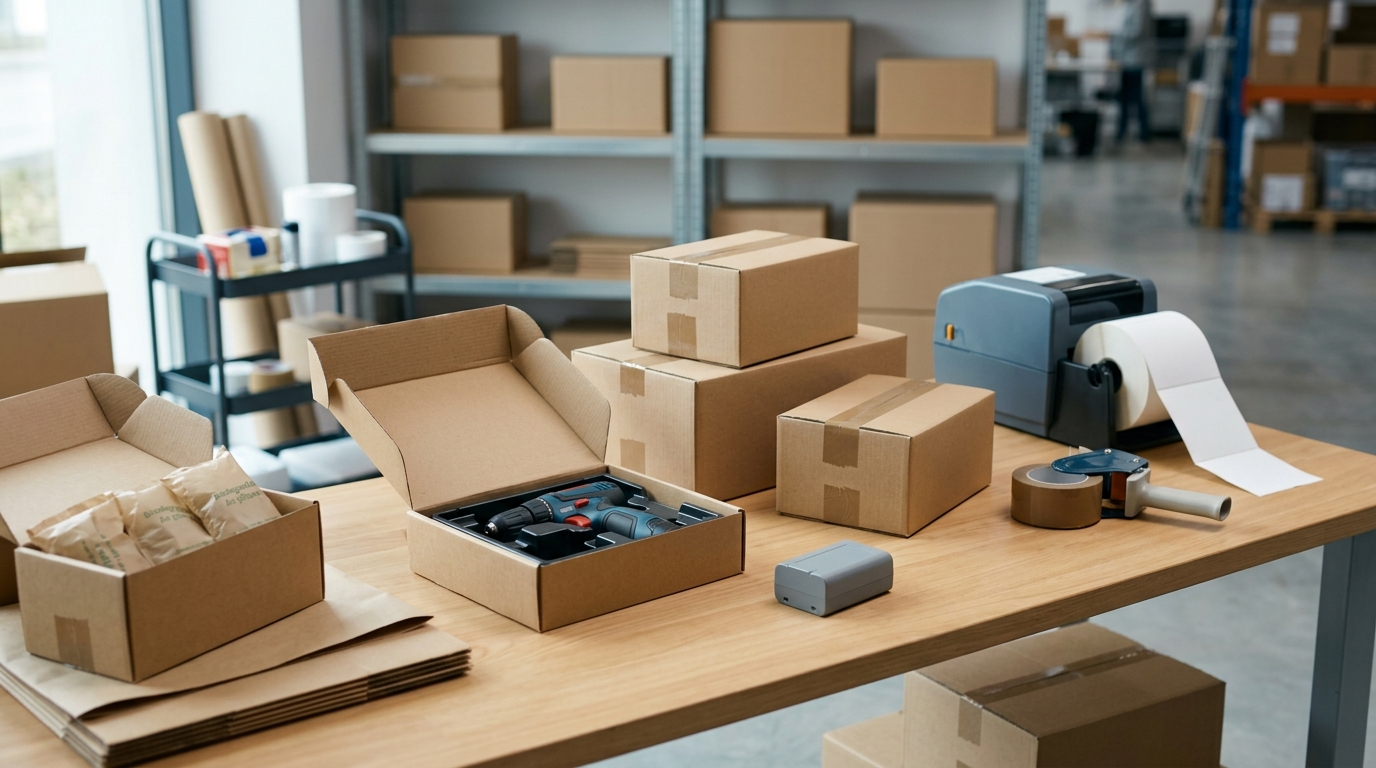
- Establish weight and material tracking for all product units, including shipping packaging and transport boxes.
Outlook: how the rules develop from here
European and Dutch EPR frameworks continue to change. The European Packaging and Packaging Waste Regulation (PPWR), Regulation (EU) 2025/40, entered into force on 11 February 2025 and has applied generally since 12 August 2026[6], so its producer registration, authorised representative and platform verification rules are live law rather than a deadline. How Dutch registration portals, authorised representation rules and thresholds are adjusted under national implementing instruments is still being worked out.
The general rule stays stable: in a non-EU dropshipping setup, the Dutch seller is the producer, and an EU supplier only carries the duty if it has demonstrably already placed the goods on the Dutch market.
Environmental compliance rules across the European Union and the Netherlands are subject to continuous legislative refinement. Revisions to packaging frameworks, battery circularity requirements, and expanding digital platform obligations mean that statutory definitions of producers and intermediary liabilities will continue to adjust over the coming years.
That is the limit of any general article: it can name the rule, but it cannot confirm which registrations your specific supplier routes and product streams actually trigger.
Because implementation dates and national administrative guidelines remain subject to evolving publications, long-term rules cannot be predicted with absolute finality. Maintaining clear documentation of current supply routes is the only reliable foundation for future adjustments.
Which obligations apply depends on your exact role in the chain (whether you import, source from domestic suppliers, or sell under your own label), which cannot reliably be resolved through a general checklist alone. To understand your compliance position today and be on the safe side, start the EPR needs assessment now. After that, our experts support you in implementing the requirements and keep you covered as the rules evolve.
Frequently asked questions
- Dropshipping EPR: who is responsible?
- You are. When a customer buys from your webshop and the goods ship from outside the EU, you place the product on the market. Dutch EPR law makes you the producer, which means packaging in every case, plus WEEE, batteries or textiles for the product groups you actually sell.
- What if my dropshipping supplier claims EPR is already included?
- You cannot rely on general claims. To be exempt, your supplier must be an EU-based entity already registered for EPR in the Netherlands. You must secure written confirmation of their specific Dutch registration numbers.
- Are there any exemptions for low order volumes in dropshipping?
- Producer status itself applies from the first item sold, and so does the duty to know the weight and material of your packaging. Volume only decides the paperwork: above 50,000 kg of packaging a year you file the annual declaration and pay the Verpact contribution, below it you do not, except for single-use plastic and deposit-scheme packaging, which carry no threshold. For WEEE and textiles there is no volume threshold at all.
- Who is responsible for packaging added by the dropshipping supplier?
- As the seller placing the product on the Dutch market, you are responsible for all packaging that reaches the end consumer. This includes the product packaging and any shipping materials added by your dropship supplier.
- How does print-on-demand dropshipping affect EPR duties?
- Print-on-demand is treated exactly like standard dropshipping. Because you sell the physical product to the end consumer, you are the producer and must register the packaging and any relevant electronic or battery components.
- When does the EPR responsibility flip to the dropshipping supplier?
- The responsibility flips only if your supplier is based within the EU and is already registered for the specific EPR regime in the Netherlands. In true intermediary setups with a registered EU supplier, they bear the duty.