What UPV Textiel is, when it started, and its 2030 targets
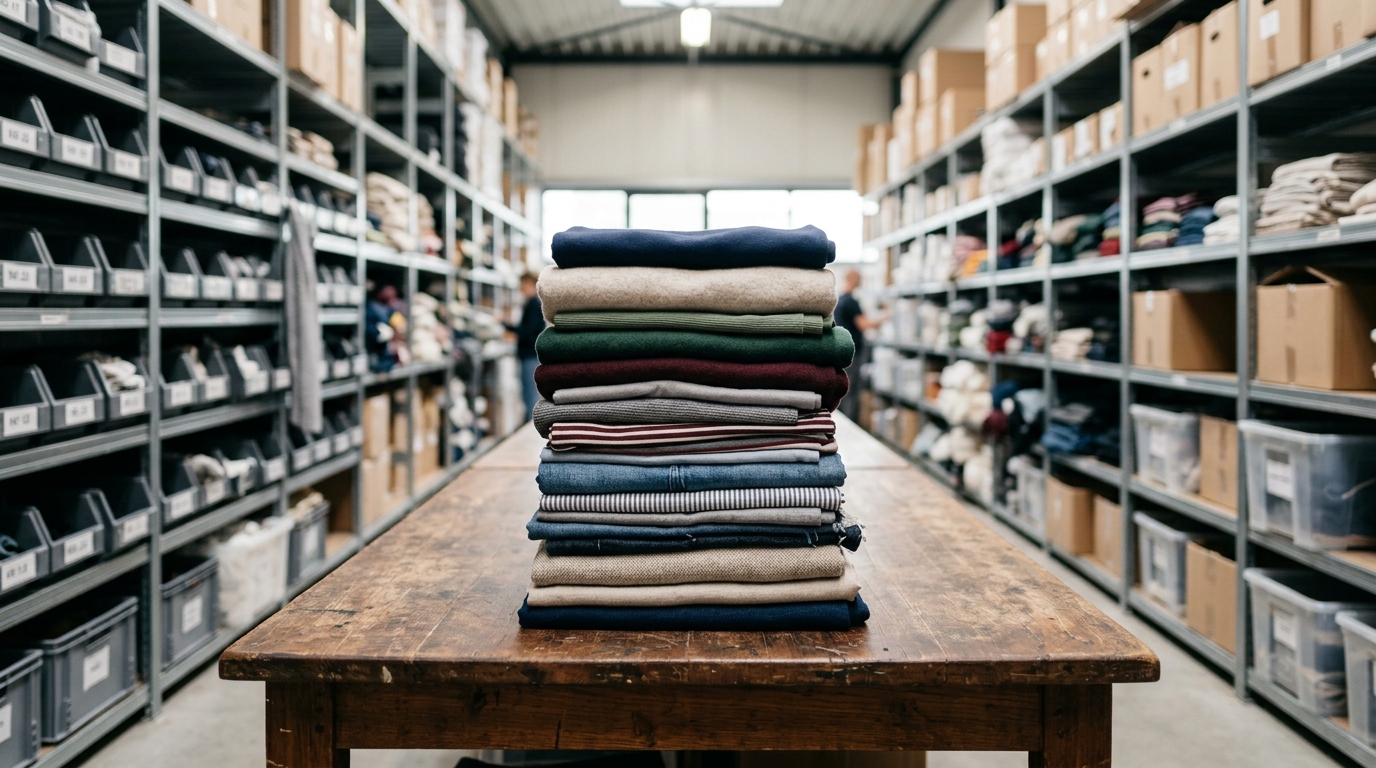
UPV Textiel is the Dutch Extended Producer Responsibility scheme for clothing and household textiles, legally binding producers, importers and online sellers who place these products on the Dutch market. In force since 1 July 2023 under the Besluit uitgebreide producentenverantwoordelijkheid textiel, it covers consumer clothing, workwear and household linen such as table, bed and household linen[1], and it shifts the operational and financial responsibility for waste management, collection, sorting, reuse and recycling directly onto commercial market entrants.
The primary objective of the decree is to transform the textile supply chain into a circular system and reduce residual waste sent to incinerators. Rather than relying solely on municipal collection systems, producers must establish, organise and fund systems that collect discarded textiles from consumers free of charge, ensuring that valuable fibres re-enter the production cycle.
Under the Besluit UPV textiel, minimum waste-management targets must be met every year, they rise year on year, and each one is measured against the weight of textiles the producer placed on the Dutch market in the preceding year[2]. The fibre-to-fibre target is the exception: it is a share of what you have recycled, not of what you placed on the market[4]. Crucially, the decree sets no separate stand-alone collection target; collection volumes are driven directly by the obligation to hit concrete reuse and recycling quotas.
| Statutory target | 2025 | 2026 to 2029 | From 2030 | Basis of measurement |
|---|---|---|---|---|
| Preparation for reuse and recycling (combined) | 50% | 55%, 60%, 65%, 70% | 75% | Weight placed on the Dutch market in the preceding year[4] |
| Preparation for reuse | 20% | 21%, 22%, 23%, 24% | 25% | Weight placed on the Dutch market in the preceding year[4] |
| Reuse taking place inside the Netherlands | 10% | 11%, 12%, 13%, 14% | 15% | Weight placed on the Dutch market in the preceding year[4] |
| Fibre-to-fibre recycling | 25% | 27%, 29%, 31%, 32% | 33% | Share of the recycled textiles, processed so the fibres are reapplied in materials for clothing or household textiles[4] |
The sub-targets demand specific structural performance: from 2030, alongside the 75 percent combined obligation, at least 25 percent of the previous year's market weight must be prepared for reuse, at least 15 percent must actually be reused within the Netherlands, and at least 33 percent of the recycled volume must be fibre-to-fibre recycling back into clothing or household textile materials rather than downcycling into insulation or rags[4].
Who is responsible: the producer and importer definition
Responsibility under UPV Textiel follows the first-placer principle. Anyone who professionally offers newly manufactured clothing (consumer clothing and workwear, including safety clothing) or household textiles (table linen, bed linen, and household linen such as hand and tea towels) on the Dutch market for the first time counts as a producer, whatever sales technique is used[2]. It also makes no difference who receives the product first, a reselling retailer or the end user. Your corporate form or brand size does not alter this status.
Under the producer definition, four main commercial roles trigger direct compliance duties:
- Domestic manufacturers: companies producing finished garments or household linen in the Netherlands and selling them directly or via wholesale to Dutch buyers.
- Direct importers: Dutch companies purchasing clothing or linen from outside the Netherlands (whether from EU member states such as Portugal or Italy, or non-EU countries like China or the UK) and bringing them into Dutch territory.
- Private-label sellers: webshops and retailers that have clothing manufactured under their own brand or commercial trade name, regardless of who operates the manufacturing facility.
- Foreign distance sellers: cross-border e-commerce companies shipping textiles directly from abroad to consumers in the Netherlands.
Conversely, an explicit no-case applies to standard domestic retail distribution: if a Dutch webshop or boutique buys wholesale stock from a registered Dutch distributor who already imported and declared the goods in the Netherlands, the retailer does not count as the first placer. The upstream Dutch distributor has already incurred the primary producer obligation. Verifying the agreed international commercial terms (such as DDP versus EXW) and customs declarations is critical to establish where legal title passes.
Cross-border trade introduces parallel responsibilities. If you also sell products across the German border, separate national regimes apply: packaging requires registration in LUCID and a system participation contract under the PPWR and the German VerpackDG, and since 12 August 2026 a seller without a German establishment also needs an authorised representative in Germany. We map these multi-country requirements systematically so you avoid blind spots across international channels.
What you must do: notify, report, pay
Once you count as a producer under UPV Textiel, the Dutch rules set out a fixed set of duties: notify Rijkswaterstaat, organise and pay for the waste management of your textiles through a suitable take-back system that is free for whoever hands textiles in, meet the annual minimum targets, and file a report with Rijkswaterstaat before 1 August each year[2].
- Submit the producer notification (melding): you must formally notify Rijkswaterstaat, within six weeks of the day the rules start applying to you, that you operate as a textile producer on the Dutch market, and describe how you intend to meet the statutory targets.
- File annual reports: before 1 August each year, you report on the previous calendar year, including the net kilogram weight of clothing and household textiles you placed on the Dutch market.
- Pay for the textile management: producers fund the collection, sorting and circular processing of textile waste, in practice through a per-kilogram contribution to a producer organisation.
Producers can meet these duties individually by building their own return and sorting arrangements. Because that is not simple to arrange, Rijkswaterstaat points to the alternative of joining a producer organisation, which is then responsible on your behalf for making the notification, organising collection, ensuring enough textile is prepared for reuse and recycled, and filing the annual report, in exchange for a financial contribution[2].
Three producer organisations are currently active in the Netherlands: Stichting UPV Textiel (the largest collective scheme), European Recycling Platform Netherlands B.V., and Collectief Circulair Textiel[2]. Stichting UPV Textiel has set its 2026 textile management fee (textielbeheerbijdrage) at EUR 0.24 per kilogram of textiles placed on the Dutch market[3]. The organisation pools these funds to contract waste collectors, sorters and recycling facilities, and it handles the notification and annual reporting for its participants.
What UPV Textiel means for your webshop
E-commerce businesses selling clothing, fashion items, or bed and bath textiles must translate these statutory requirements into operational workflows. Unlike the packaging regime under the Besluit beheer verpakkingen 2014, where the contribution to Verpact only starts above 50,000 kg of packaging per calendar year, UPV Textiel contains no minimum volume exemption. Whether your webshop sells 10 garments or 50,000 items annually, compliance obligations apply from the very first piece placed on the market.
Webshops must maintain a clean administrative trail to substantiate their annual kilogram declarations. When the ILT conducts an audit, you must present itemised purchase and sales data backed by primary commercial evidence.
- Net garment weight tables: maintain a master SKU registry documenting the accurate net weight in grams for every clothing and household textile item sold.
- Supplier delivery documentation: archive commercial invoices and customs entries confirming the origin, customs codes and purchase dates of imported textile goods.
- Sales volume logs: export verified annual sales reports filtered specifically for deliveries to Dutch destination addresses.
- Packaging separation: account for shipping boxes, mailer bags and polybags separately under the Dutch EPR schemes for packaging.
| Operational task | Required documentation | Frequency / deadline | Enforcement focus |
|---|---|---|---|
| Master SKU weight logging | Specification sheets, physical weighing logs per SKU | Ongoing at product onboarding | Accurate per-item net weight |
| Producer notification | Producer organisation contract confirmation or Rijkswaterstaat filing | Six weeks from the day the rules start applying to you[2] | Active producer status |
| Annual report | Dutch delivery reports multiplied by SKU weights (in kg) | Annually, before 1 August, to Rijkswaterstaat[2] | Completeness of Dutch sales |
| Fee settlement | Financial settlement with the collective scheme (EUR 0.24 per kg in 2026 at Stichting UPV Textiel) | Provisional declaration before 1 April; the realised volume is declared before 1 April the following year and the difference is settled[3] | Full payment of the contribution |
Factoring compliance costs into unit economics is straightforward. At the 2026 tariff of EUR 0.24 per kilogram[3], an average cotton sweatshirt weighing roughly 0.5 kg carries about EUR 0.12 of UPV Textiel contribution per unit sold. Ensuring your ERP and product database capture net garment weights automatically eliminates manual reporting bottlenecks at year-end.
Outlook: how the rules develop from here
The Dutch UPV Textiel framework continues to evolve alongside broader European policy. New European rules for textile extended producer responsibility have been agreed, and Dutch legislation will be amended to match: Rijkswaterstaat expects the new rules to apply in the Netherlands from early 2028, widening the scope towards home textiles, textile-related accessories and footwear, giving online platforms a checking role, and giving producer organisations more responsibilities[2]. Until that national implementation lands, the existing Dutch decree remains fully in force and today's duties are unchanged.
In the coming years, fee structures are expected to incorporate eco-modulation criteria, adjusting per-kilogram tariffs based on garment durability, fibre composition, recycled content, and ease of mechanical or chemical recycling. While the exact calculation formulas and modulation tiers are not yet finalised in official instruments, producers will face increasing demands for material transparency.
- European harmonisation: aligning national collection definitions and authorised representative mandates across EU member states.
- Eco-modulated tariffs: financial incentives rewarding circular design and disincentivising non-recyclable multi-fibre blends.
- Expanded scope: the announced inclusion of footwear, home textiles and textile-related accessories from the 2028 rules onwards.
Which textile EPR obligations apply depends on your exact role: whether you manufacture, import from abroad, or sell clothing under your own private label decides who counts as the producer and which duties are yours. These distinctions cannot reliably be resolved through a general checklist alone.
To understand your compliance position today and be on the safe side, start the Digital needs analysis now. Afterwards, our experts support you in implementing the requirements and keep you covered as the rules develop.
Frequently asked questions
- Which scheme applies to what I sell?
- UPV Textiel covers consumer clothing, workwear, and household linen like bedsheets and towels. It does not currently cover shoes, belts, headwear or accessories such as bags. Ensure you also check packaging obligations (Verpact) and, if applicable, WEEE for electronic components, as each regime requires separate compliance.
- Who counts as the producer in my setup?
- You are the producer if you manufacture textiles, import them from outside the Netherlands, or sell them under your own brand name. If you only resell items purchased from a Dutch supplier who has already registered them, you generally do not carry the UPV Textiel duty.
- Does the scheme apply to second-hand goods?
- No, UPV Textiel targets textiles being placed on the Dutch market for the first time. Selling second-hand clothing that was already marketed in the Netherlands does not trigger a new producer obligation or require a per-kilogram fee.
- What happens with marketplace sales?
- If you are a Dutch webshop selling through platforms like bol.com or Amazon, you remain the producer and must report those volumes yourself. The marketplace does not automatically take over your UPV Textiel reporting duties for the Netherlands.
- What should I do if I missed the notification deadline?
- The UPV Textiel scheme has been in force since 1 July 2023. If you have been placing textiles on the market without notifying Rijkswaterstaat or joining a producer organisation, do so as soon as possible and declare your past volumes. A late notification is the way to resolve the non-compliance, not a reason to wait.
- Where do I start if none of this has been arranged yet?
- First, determine your exact role, such as whether you import, manufacture, or re-sell. Then notify Rijkswaterstaat or join a producer organisation such as Stichting UPV Textiel to cover the financial and reporting obligations. Since roles dictate duties, a specific needs assessment is the best first step.